 ultimate-guide
DSD Career Paths for CDL Holders: Routes & Opportunities
Table of Contents
- Understanding DSD Career Paths for CDL Holders
- Direct Store Delivery Driver Jobs and Roles
- DSD Driver Responsibilities and Daily Work
- DSD Driver Qualifications and Requirements
- Compensation and Earnings in DSD Work
- How to Find Direct Store Delivery Jobs
- Career Advancement and Progression in DSD
- Frequently Asked Questions
Last Updated: October 9, 2026
Understanding DSD Career Paths for CDL Holders
Direct store delivery is one of the most stable career paths for CDL holders seeking consistent work and predictable schedules. At DSD Route Sales Connections, we connect experienced route drivers and sales representatives with top employers across beverage, snack, bakery, and general merchandise.
DSD work means delivering products directly to retail locations, grocery stores, convenience stores, gas stations, and specialty shops.
What makes DSD career paths for CDL holders attractive is the combination of job security and lifestyle fit. Routes are established, customers are repeat relationships, and you know roughly where you'll be each day.
Direct Store Delivery Driver Jobs and Roles
The DSD sector isn't one-size-fits-all. Different product categories create different job environments, compensation structures, and advancement opportunities.
Beverage Route Delivery
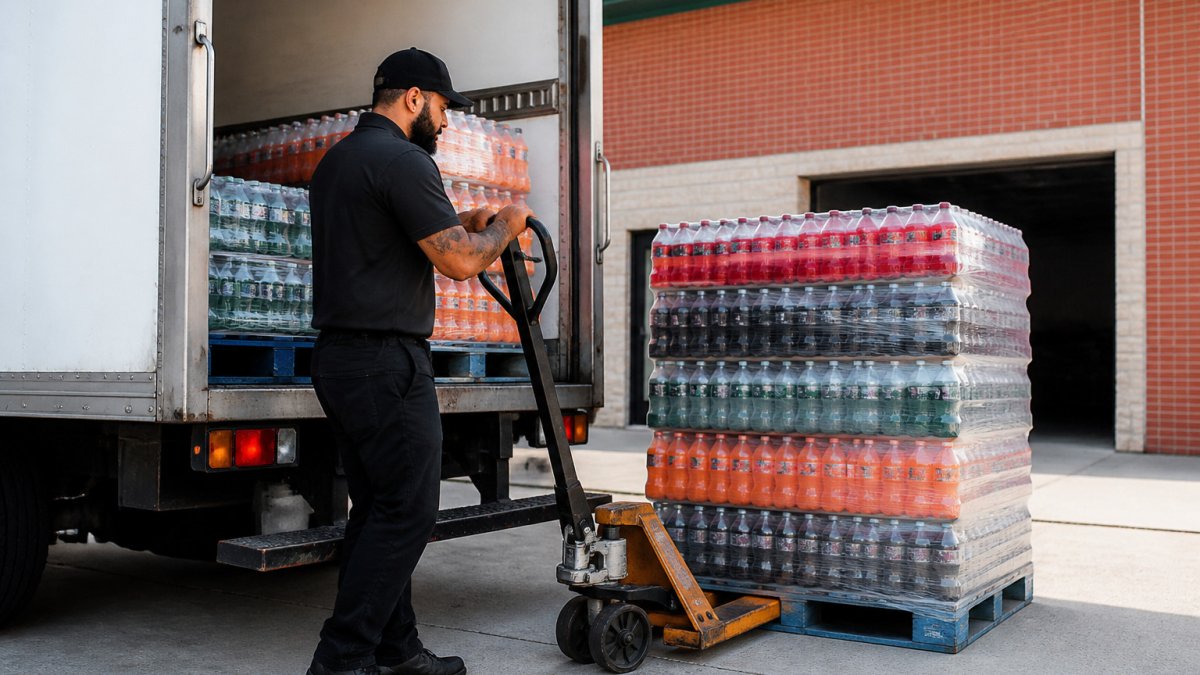
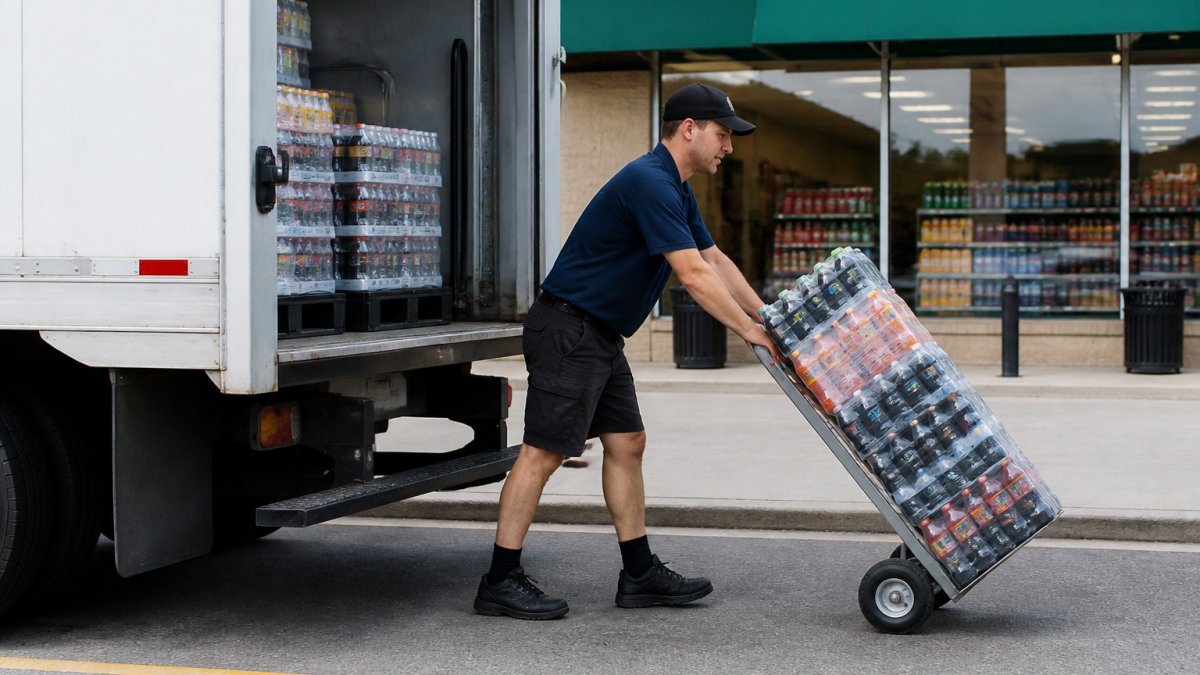
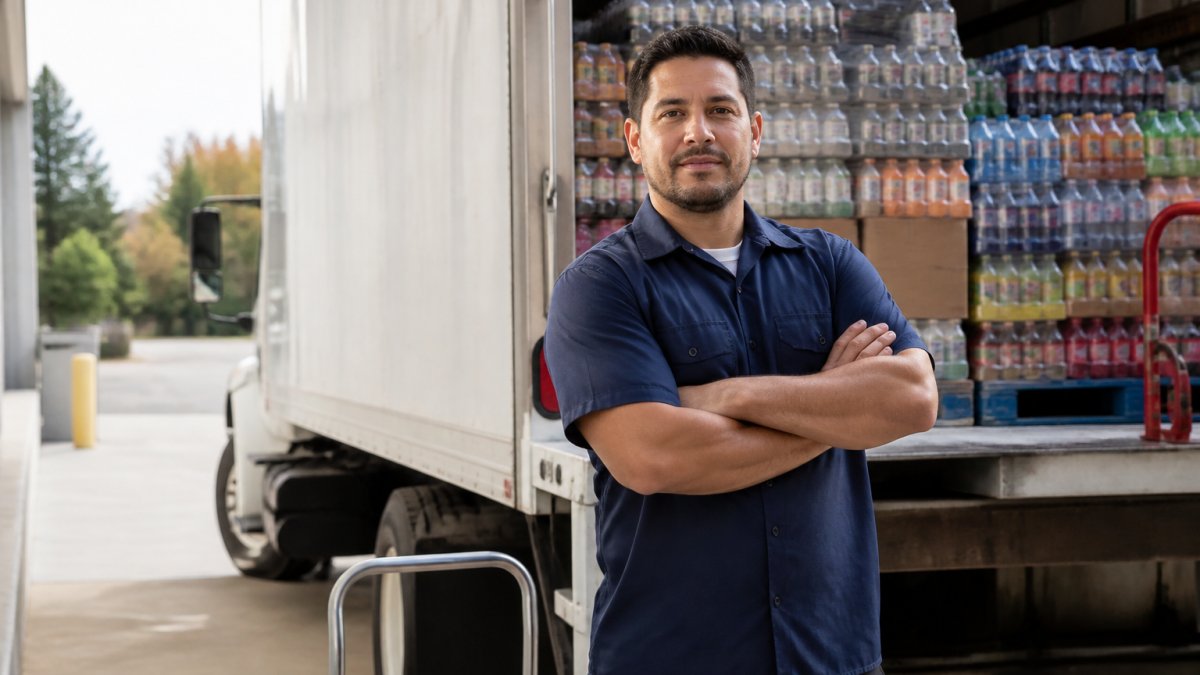
Beverage delivery is the largest DSD segment. You haul cases of soda, water, juice, energy drinks, or alcohol to retail locations. Physical demands are significant: cases are heavy, stacking is repetitive, and you move product multiple times per day.
Beverage routes cover defined territories, often 30-60 stops per day. Early starts are standard, most drivers are on the road by 4 or 5 a.m. to stock shelves before stores open.
Snack and Bakery Distribution
Snack and bakery distribution involves lighter product (chips, cookies, crackers, bread) but more SKUs, and requires more merchandising skill: arranging displays, rotating stock by date, and managing shelf space.
Bakery routes involve fresh product with shorter shelf lives: you pull expired items, replace them with fresh stock, and track inventory carefully. These roles pay slightly less than beverage but build the customer relationship skills that lead to full sales representative roles.
General Merchandise Routes
General merchandise DSD covers everything else: pet food, household products, health and beauty items, seasonal goods.
General merchandise DSD career paths often lead to broader distribution or account management roles because you manage multiple categories.
DSD Driver Responsibilities and Daily Work
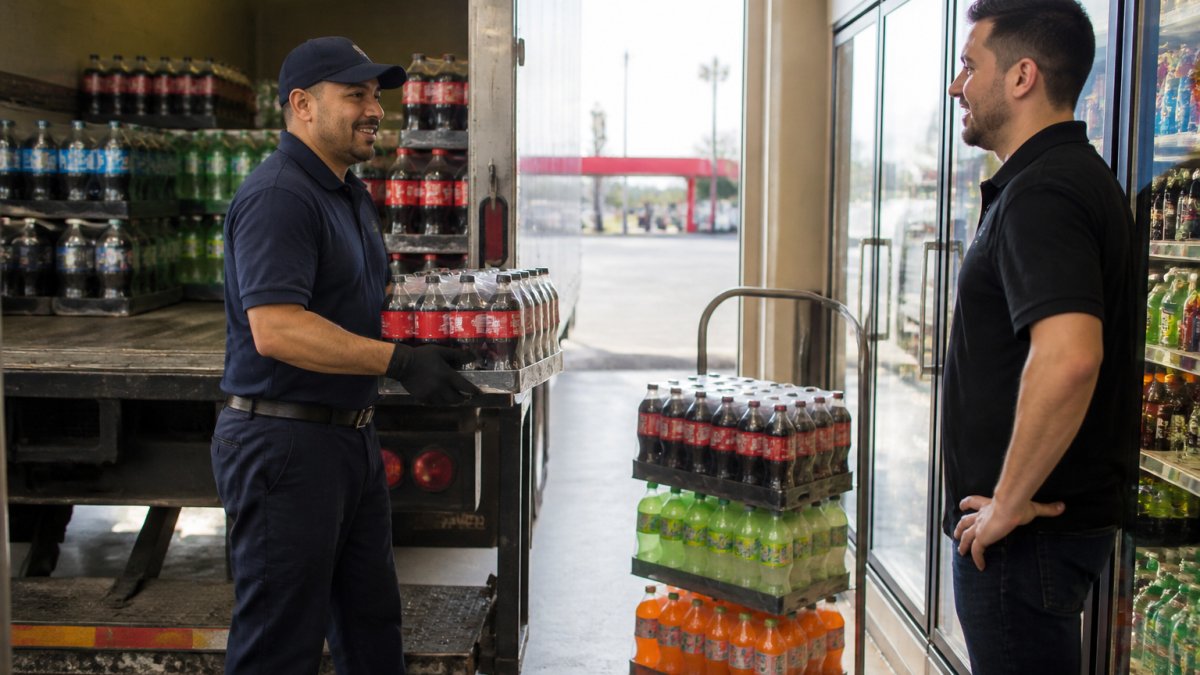
A typical DSD day starts early: you arrive at the warehouse, load assigned inventory, check your route sheet, and depart. The day is a mix of driving, unloading, stocking, and customer interaction.
Customer interaction is core to DSD work: building relationships with store managers, discussing product performance, identifying shelf space issues, and sometimes upselling.
Physical demands vary by product category but are consistent across DSD work.
DSD Driver Qualifications and Requirements
DSD hiring managers screen on four things: license class, driving record, physical capacity, and customer-facing reliability.
License class and endorsements
The license you need depends on the gross vehicle weight rating (GVWR) of the truck you'll drive, not the product.
- CDL-B covers a single vehicle with a GVWR of 26,001 pounds or more, or any such vehicle towing a unit weighing 10,000 pounds or less. Many beverage, snack, and general merchandise box trucks and straight trucks fall in this class, making CDL-B the most common credential for DSD route work.
- CDL-A covers a combination vehicle with a GVWR of 26,001 pounds or more, provided the towed unit exceeds 10,000 pounds. Larger regional DSD routes, tractor-trailer shuttle runs, and some high-volume beverage operations require CDL-A.
- Non-CDL straight trucks under 26,001 pounds GVWR appear in some snack, bakery, and general merchandise routes. These "box truck" or "route sales" positions do not require a CDL, though a CDL holder is preferred.
Endorsements matter in specific DSD segments:
- Hazmat (H) endorsement plus a Transportation Security Administration security threat assessment is required if you haul placarded quantities of certain products. Some beverage and chemical-adjacent DSD routes touch this.
- Tanker (N) endorsement applies if you pull a tank vehicle, uncommon in traditional store-delivery work but present in some bulk beverage and syrup operations.
- Air brakes (L) restriction removal is effectively mandatory for most CDL vehicles; if your license carries an air brake restriction, confirm the employer's fleet before applying.
A current DOT medical examiner's certificate (DOT medical card) is standard for any CDL position. Most employers run a Motor Vehicle Record (MVR) review and background check, and many query the FMCSA Drug and Alcohol Clearinghouse pre-employment.
Driving record and background
A clean MVR is the baseline. Common disqualifiers include recent DUI or DWI convictions, reckless driving, multiple at-fault accidents, and suspended or revoked licenses. Because commercial auto insurance premiums scale with driver risk, carriers screen aggressively, with a lookback window often three to five years.
Physical demands, stated plainly
DSD work is a material-handling job with a steering wheel attached. Expect:
- Repeated lifting in the 25 to 50 pound range, with some cases (beverage, bulk water, large pet food bags) exceeding that.
- Hundreds of case-handling repetitions per shift on dense beverage routes.
- Climbing in and out of the cab and trailer dozens of times per day, plus ladder work to reach high shelves and back-stock areas.
Some employers require a pre-employment physical or functional capacity evaluation, often a lift test simulating the heaviest product on the route. If you have a back, knee, or shoulder history, get an honest assessment before committing to a beverage route, the most physically punishing DSD segment.
Experience, age, and soft skills
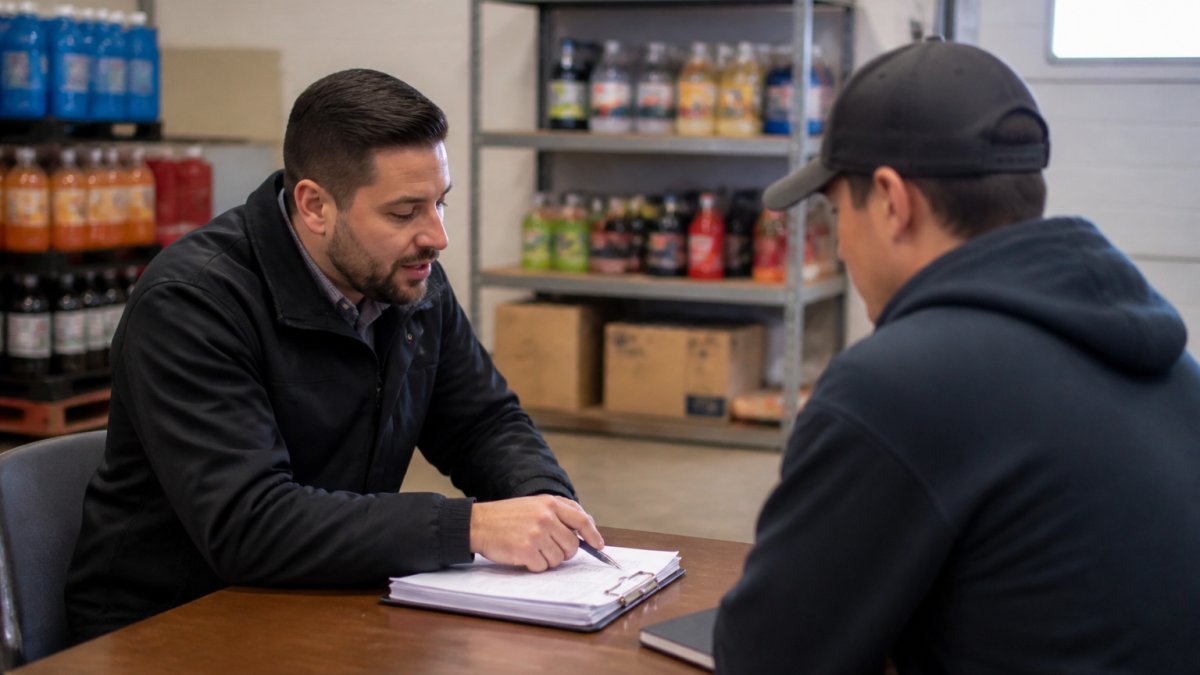
Prior DSD or delivery experience is preferred but often not required. Many distributors hire drivers with no direct store delivery background and train on the route.
You must be at least 21 to drive interstate in a CMV and to hold a hazmat endorsement.
Soft skills carry real weight. You are the face of the brand in every store.
Compensation and Earnings in DSD Work
DSD pay is a structure, not a single number. The three common models are hourly, commission, and hybrid.
The three pay structures
Hourly. A set rate for hours worked, with overtime at 1.5x after 40 hours under the Fair Labor Standards Act (FLSA) (Overtime Pay).
Commission or incentive. Pay is tied to cases delivered, route revenue, or a percentage of sales.
Hybrid (base plus incentive). A guaranteed hourly or salary base plus bonus or commission. Increasingly common because it balances income stability with performance upside.
What the numbers look like
Bureau of Labor Statistics data for light truck or delivery services drivers, the category that most closely maps to DSD route work, shows median annual wages in the mid-$40,000s, with the middle 50 percent earning roughly the high-$30,000s to mid-$50,000s. Top earners, including senior route drivers and commission earners, exceed that band. Figures are national and pre-tax; your market, product category, and route volume move you within or outside the band.
Overtime, bonuses, and the details that change the math
- Overtime. Non-exempt drivers earn time-and-a-half past 40 hours. Some routes routinely run 45 to 55 hours, materially raising annual take-home. Confirm whether the route is realistically a 40- or 50-hour week before comparing offers.
- Safety and performance bonuses. Many distributors pay quarterly or annual bonuses for clean MVRs, no accidents, and on-time route completion, adding several hundred to a few thousand dollars per year.
- Route or territory incentives. Commission roles may pay more for new account acquisition or for hitting case-volume targets.
Benefits
Larger distributors, national beverage and snack companies, and broadline foodservice operators typically offer health, dental, and vision insurance, a 401(k) match, and paid time off. Smaller regional distributors may offer limited or no benefits, which can make a higher hourly rate a worse deal. Always compare total compensation, not headline pay.
Total compensation comparison
When weighing a DSD offer against long-haul, local, dedicated, or less-than-truckload (LTL) work, look at the whole package:
- Long-haul often pays the highest gross, but you trade home time and incur personal costs (food, sometimes lodging).
- LTL (linehaul and pickup-and-delivery roles at national carriers) pays well per hour with strong benefits, but schedules can include nights and dock work.
- Dedicated routes offer predictable lanes and customers, with pay varying widely by contract.
- DSD pays less gross than long-haul but keeps you home nightly, builds customer relationships, and opens a path into sales and supervision that pure driving roles do not.
The right comparison is not dollars per hour, but dollars per hour adjusted for home time, physical wear, schedule predictability, and advancement ceiling.
Ask three questions before accepting any DSD offer: Is the route hourly, commission, or hybrid? What is the realistic weekly hour count? And what is the total value of benefits? The answers, not the headline rate, determine whether the job is a good deal.
How to Find Direct Store Delivery Jobs
Finding quality DSD positions requires knowing where to look. General job boards like Indeed or LinkedIn list DSD roles but mix them with unrelated positions. Specialized platforms built for the DSD industry are more effective.
Using Specialized Job Boards
DSD Route Sales Connections is built exclusively for direct store delivery professionals, connecting experienced route drivers and sales representatives with employers actively hiring. Every posting is relevant to DSD work.
Specialized boards have another advantage: employers there are specifically recruiting for DSD roles, not posting generic driver positions. They understand the DSD market, the skill set required, and typical career progression.
Filtering by Location and Route Type
Once on a specialized platform, filtering is critical. DSD work is hyperlocal, routes are geographic territories, and commute time matters.
Route type filtering is equally important. Beverage routes demand more physical intensity than general merchandise.
Application steps are straightforward on dedicated platforms: upload your CDL information, driving record authorization, and basic work history. Many platforms let you apply directly to employers without intermediaries.
Career Advancement and Progression in DSD
DSD career paths for CDL holders aren't dead ends, they're starting points.
The most common progression is driver to route supervisor or territory manager.
Another path is driver to sales representative.
Some drivers move into operations or logistics roles, managing warehouse operations, inventory, or route planning.
The key to advancement is demonstrating reliability, customer relationship skills, and willingness to take on responsibility.
Finding the right DSD career path starts with understanding the roles available and matching them to your strengths and lifestyle preferences.
Frequently Asked Questions
What DSD jobs can you get with a CDL?
With a CDL, you can pursue several DSD roles including beverage route delivery, snack and bakery distribution, general merchandise routes, and customer delivery positions. Your specific opportunities depend on the vehicle weight class, endorsements (tanker, hazmat), and the distributor's needs. Many CDL holders transition directly into DSD work because the license demonstrates safe driving skills and compliance with transportation regulations.
Do DSD drivers need a CDL?
Not all DSD positions require a CDL, but most do. If the delivery vehicle's gross vehicle weight rating exceeds 26,001 pounds, federal law requires a CDL. Many DSD employers specifically seek CDL holders because it signals training, background clearance, and commitment to safety. Some light-duty or local delivery routes may not require a CDL, but having one significantly expands your job options and earning potential in the DSD sector.
What skills do employers look for in DSD drivers?
Employers prioritize safe driving skills, customer service ability, and sales aptitude. DSD driver qualifications include a valid CDL, clean driving record, ability to lift and stock products, and strong time management. Many positions also value sales experience, route planning capability, and the ability to build customer relationships. Physical fitness is important because the role involves loading, unloading, and stocking merchandise throughout the day. Reliability and punctuality are non-negotiable since routes depend on consistent service.
How can I advance my career in DSD?
Career advancement in DSD typically moves from entry-level driver positions to dedicated routes with established customer bases, then to supervisory or operations roles. Some drivers transition into sales management, recruiting, or dispatch coordination. Building a strong track record on your route, developing customer relationships, and pursuing additional endorsements (tanker, hazmat) can lead to higher-paying dedicated routes.