 ultimate-guide
Beverage Delivery Route Physical Requirements Explained
Table of Contents
- What Makes Beverage Delivery Routes Physically Demanding
- Daily Physical Tasks and Lifting Requirements
- DOT Physical Requirements for Delivery Drivers
- Lifting Techniques for Route Sales Success
- Beverage Delivery Driver Safety Standards
- Work Environment and Route Conditions
- Building Stamina and Physical Conditioning for DSD Work
- Frequently Asked Questions
Last Updated: September 25, 2026
What Makes Beverage Delivery Routes Physically Demanding
Beverage delivery ranks among the most physically taxing logistics jobs, with beverage delivery route physical requirements explained through the demands of handling cases weighing 30-50 pounds at 50-100+ stops daily. Drivers handle cases weighing 30-50 pounds at 50-100+ stops daily in varied environments, some with loading docks, others requiring stairs or narrow aisles, creating significant strain on the lower back, shoulders, and knees over 8-10 hour shifts. Success requires maintaining proper technique across hundreds of lifts when fatigue sets in, not just lifting one heavy object correctly.
Daily Physical Tasks and Lifting Requirements
The daily routine of a beverage delivery driver breaks down into distinct physical tasks that repeat throughout the route, with beverage delivery route physical requirements explained through understanding the specific demands of each task. Understanding the specific demands of each task helps drivers prepare appropriately and identify which aspects pose the greatest physical challenge.
Case Count and Weight Distribution
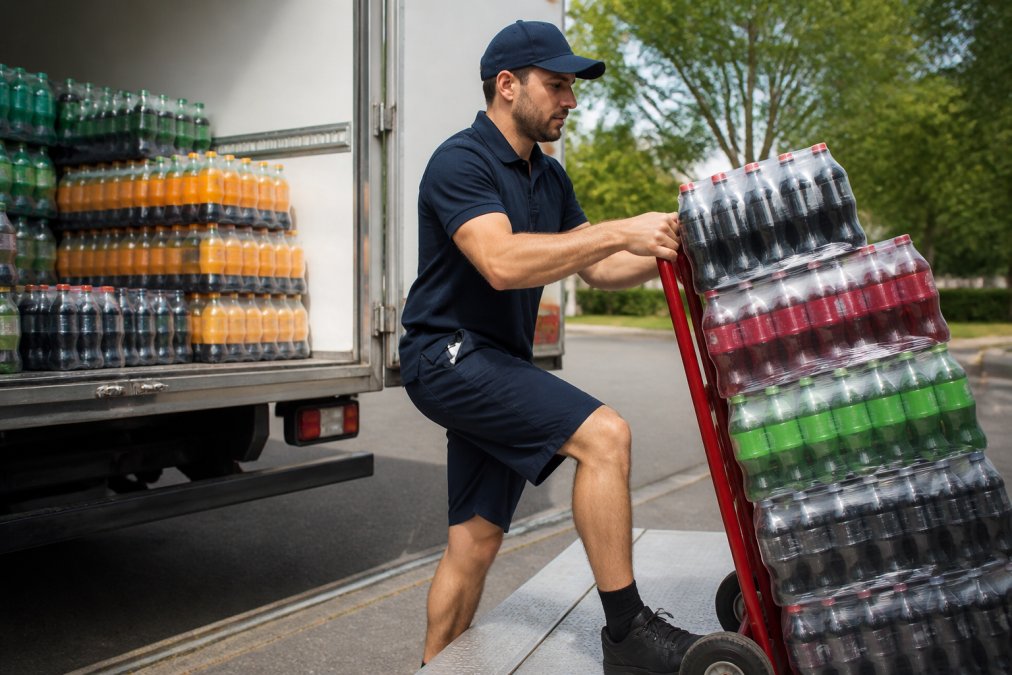
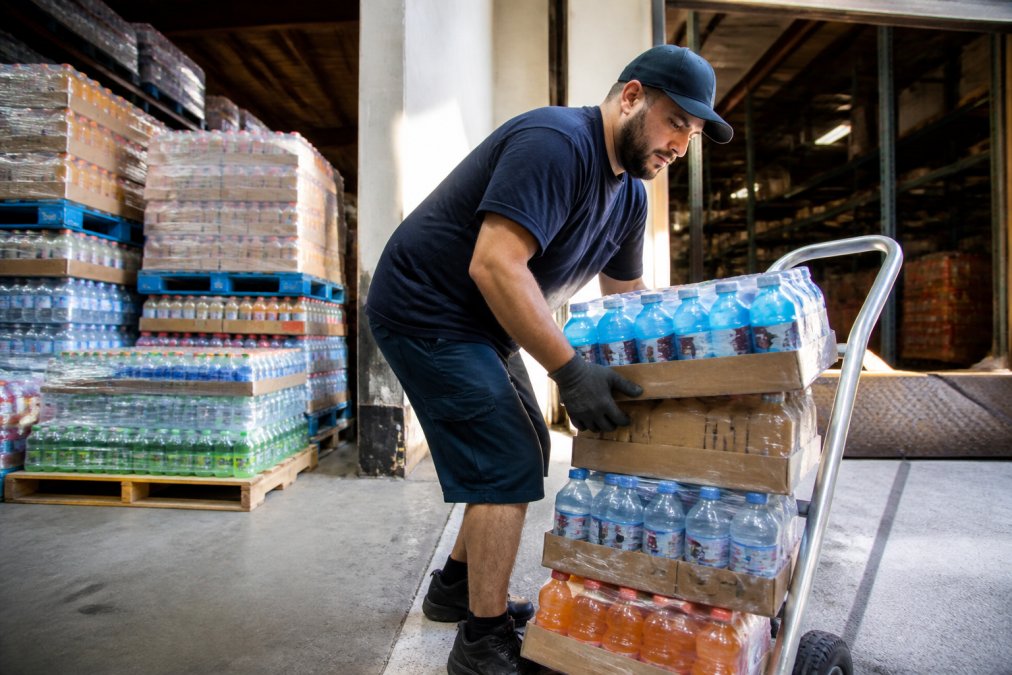
Most routes require handling 200-500 cases daily (30-50 pounds each), with weight distribution varying from 10-15 cases at gas stations to 50+ at supermarkets. Improperly secured loads shift during transit, requiring reorganization at multiple stops.
Repetitive Lifting and Manual Material Handling
A driver performing 300 lifts daily at 40 pounds each moves 12,000 pounds daily. Work-related musculoskeletal disorders, particularly lower back strain, are common when drivers rush or fail to use proper body mechanics. Hand trucks and pallet jacks reduce strain but don't eliminate it.
DOT Physical Requirements for Delivery Drivers
The Department of Transportation (DOT) physical examination is a mandatory requirement for commercial drivers, including those operating delivery vehicles over a certain weight threshold. Understanding what the DOT physical evaluates helps drivers prepare and recognize potential disqualifying conditions.
Medical Certification and Renewal Schedule
The DOT physical evaluates vision, hearing, blood pressure, diabetes, cardiovascular health, and musculoskeletal fitness. Medical certification is valid for 24 months; some conditions warrant 12-month renewal. Drivers with prior injuries should disclose them to ensure they can manage limitations safely.
Lifting Techniques for Route Sales Success
Proper lifting technique is critical for preventing injury. A systematic ergonomic approach tailored to beverage delivery's specific hazards separates drivers with long careers from those who burn out or suffer chronic injury.
The Five-Point Ergonomic Framework for Beverage Delivery
1. Pre-Lift Assessment (5-10 seconds per stop) Scan the destination area for placement location, floor conditions, and shelf height. This prevents awkward mid-lift adjustments. A 10-second assessment prevents the 30-second recovery from a strained shoulder.
2. Load Positioning During Transport Position loads at waist height, close to your torso, with arms at 90-degree angles. Slide cases along your thighs rather than holding them away from your body; this reduces shoulder and arm strain by 20-30%. When using hand trucks, load at mid-chest height and avoid stacking above shoulder height; use a step stool instead to prevent neck and upper back strain.
3. Shelf Placement and Micro-Adjustments Instead of forcing cases into gaps, remove existing product, place your cases, then restack. This distributes effort across multiple movements rather than concentrating strain in one reach. For high shelves, use a step stool to reduce reach distance and maintain 90-degree elbow angles, the optimal angle for shoulder safety.
4. Stair Navigation and Confined Spaces On stairs, carry one or two cases per trip and grip the rail with one hand. In narrow aisles, position yourself sideways when placing cases to prevent rotational strain on your lower back and shoulders.
5. Load Securement and Vehicle Organization Organize cases by delivery sequence at the start of your route. Use load bars or straps to secure stacks during transit, preventing shifting and mid-route reorganization.
Technique Adjustments for Common Retail Environments
Convenience Stores and Gas Stations: Carry 1-2 cases per trip to maintain balance in narrow aisles.
Supermarkets and Large Retail: Use hand trucks for bulk loads, then break down into smaller carries for shelf stocking.
Restaurants and Bars: Communicate with staff about the best delivery route before unloading to prevent multiple trips through tight spaces.
Recovery and Technique Refinement
If you experience soreness after your route, adjust your technique in that area. Lower back soreness indicates bending at the waist rather than knees; shoulder soreness indicates reaching too high or far; knee soreness indicates heavy loads on stairs. Apply ergonomic principles consistently: assess before lifting, keep loads close to your body, use equipment, and adjust when soreness signals a problem.
Beverage Delivery Driver Safety Standards
Safety standards in beverage delivery focus on preventing the most common injuries: back strain, shoulder injury, and knee problems. Understanding these standards helps drivers recognize hazards and take preventive action.
Injury Prevention and Occupational Hazards
Lower back injury from repetitive lifting is the most frequent occupational hazard. Prevention requires proper technique, physical conditioning, and environmental awareness. Inspect your work environment before unloading for wet spots, obstacles, or uneven flooring. Wear slip-resistant shoes with good ankle support. Avoid reaching above shoulder height; use step stools instead. If a location requires frequent high-reach placement, consider whether the route is sustainable long-term.
Work Environment and Route Conditions
Physical demands vary by route type. Convenience store routes involve 80-120 stops daily with lighter case counts; supermarket routes involve fewer stops but 100+ cases per account. Urban routes present limited parking and stairs; rural routes offer easier access but longer distances. Extreme weather increases injury risk; prioritize warm-up routines and hydration.
Building Stamina and Physical Conditioning for DSD Work
Success requires ongoing physical conditioning tailored to beverage delivery's demands. Deliberate training prevents injury, extends career longevity, and improves earnings by addressing muscular endurance, cardiovascular capacity, and postural stability.
Pre-Route Conditioning: Building Your Physical Baseline
Week 1-2: Movement Preparation and Core Activation
Focus on core engagement to stabilize your body during lifting. Perform dead bugs (3 sets of 10 per side), bird dogs (3 sets of 10 per side), planks (3 sets of 20-30 seconds), and glute bridges (3 sets of 15) to build foundational core and posterior chain stability.
Week 3-4: Loaded Movement Patterns
Week 5-6: Endurance and Volume
In-Route Conditioning: Maintaining and Improving During Employment
Daily Pre-Route Warm-Up (5-10 minutes)
Perform arm circles, shoulder rolls, leg swings, bodyweight squats, cat-cow stretches, and walking lunges. This routine activates stabilizer muscles and primes your nervous system for safe lifting.
Post-Route Recovery (10-15 minutes)
- Quad stretches (30 seconds per leg): Hold your foot toward your glutes, standing or lying down.
- Hamstring stretches (30 seconds per leg): Fold forward or use a strap to pull your leg toward your chest.
- Hip flexor stretches (30 seconds per side): Lunge position, sink hips forward. Tight hip flexors increase lower back strain.
- Spinal twists (30 seconds per side): Lying on your back, pull one knee across your body, keeping shoulders flat.
- Child's pose (60 seconds): Kneel, sink hips to heels, extend arms forward. This decompresses your spine after hours of loading.
- Foam rolling (1-2 minutes per muscle group): Roll your calves, quads, IT band, and upper back on a foam roller. This breaks up muscle tension and improves blood flow.
Weekly Supplemental Training (2-3 sessions, 30-45 minutes each)
- Session 1 (Lower Body Emphasis): Squats, lunges, step-ups, single-leg deadlifts, calf raises. Focus on leg strength and stability, which support your lower back during lifting.
- Session 2 (Upper Body and Core Emphasis): Rows, chest presses, shoulder presses, planks, dead bugs, farmer carries. Build pulling strength (for hand truck operation) and core stability.
- Session 3 (Conditioning and Mobility): 20-30 minutes of moderate-intensity cardio (walking, cycling, rowing) followed by 15 minutes of stretching and mobility work. This builds cardiovascular endurance and maintains flexibility.
Nutrition and Recovery for Sustained Performance
Physical conditioning is only half the equation. Nutrition and recovery determine whether your body adapts to the demands of beverage delivery or breaks down.
Protein and Muscle Recovery
Carbohydrates for Energy and Glycogen Replenishment
Hydration During the Route
Sleep and Adaptation
Recognizing and Addressing Overtraining or Injury
Some soreness is normal during conditioning. Distinguish between productive soreness (muscle soreness 24-48 hours after training) and pain signaling injury (sharp, localized, or worsening over days).
Red flags requiring rest or professional evaluation:
- Sharp pain during or immediately after lifting
- Swelling or bruising
- Pain that worsens over multiple days despite rest
- Pain that affects your lifting mechanics or gait
- Numbness or tingling (possible nerve involvement)
Progression and Long-Term Sustainability
Beverage delivery is sustainable if you treat your body as a long-term asset. Consistent conditioning and recovery enable productive work into your 50s and 60s; ignoring these leads to burnout within 3-5 years.
Frequently Asked Questions
Do beverage delivery drivers need to pass a DOT physical exam?
Yes. Drivers operating commercial vehicles over a certain weight threshold must pass a DOT physical examination. The exam includes vision, hearing, blood pressure, and other health assessments to ensure you can safely operate a route truck. You'll need to renew your medical certification periodically, typically every one to two years depending on your health status and the examining physician's recommendation.
How much weight do beverage delivery drivers typically lift daily?
Most beverage delivery drivers handle 50 to 100+ pounds per shift, depending on case count and product type. A single case of beverages typically weighs 30 to 40 pounds. On high-volume routes, drivers may lift several hundred cases across multiple stops. This repetitive lifting is one of the primary physical demands of the job and requires proper technique and conditioning to avoid work-related musculoskeletal disorders.
What equipment do beverage delivery drivers use to reduce physical strain?
Hand trucks, pallet jacks, and dollies are standard tools that reduce the physical exertion required during DSD work. Many routes also use route trucks equipped with shelving and load securement systems. Proper use of equipment is essential for both safety and efficiency. Training on equipment maintenance and operation is typically provided by employers and helps prevent injuries and extends equipment life.
What are the main safety standards beverage delivery drivers must follow?
Beverage delivery driver safety standards include proper load securement to prevent shifting during transport, adherence to OSHA guidelines for manual material handling, and compliance with occupational hazard protocols specific to warehouse and dock environments. Drivers must also follow their employer's injury prevention procedures, use appropriate footwear and protective equipment, and report hazards immediately. Regular safety training and compliance with DOT regulations are mandatory across the industry.