 ultimate-guide
What Are Direct Store Delivery Route Requirements?
Last Updated: October 25, 2026
Quick Summary
Direct store delivery route requirements define the qualifications, compliance standards, and operational capabilities needed to execute DSD operations, spanning commercial driver licensing, medical certification, vehicle standards, inventory management, customer service, and regulatory compliance. Requirements split into legal mandates such as CDL licensing based on vehicle gross weight rating and DOT medical certification, and employer preferences like prior delivery experience and software proficiency.
- A CDL is required for vehicles with a GVWR of 26,001 pounds or more; many DSD routes operate below this threshold and require only a standard driver's license.
- DOT medical certification is valid for up to 24 months and required for drivers operating commercial motor vehicles in interstate commerce.
- DSD drivers must pass background checks covering 7-10 years, drug and alcohol testing, and food-safety training for routes carrying food and beverages.
- Route drivers work 8-10 hours daily involving repeated lifting of 40-50 pound cases, overhead reaching, and ladder work in retail aisles.
- Commission structures typically range from 3-8% of net sales, with compensation calculated after deducting returns, promotional allowances, and damaged product.
Table of Contents
- What Direct Store Delivery Route Requirements Cover
- Direct Store Delivery Driver Requirements and Qualifications
- Legal Requirements: Licensing and Vehicle Class
- Medical Certification and the DOT Physical
- Background Checks, Drug and Alcohol Testing, and the Clearinghouse
- Physical Demands and OSHA Obligations
- Food Safety and Product-Handling Requirements
- Insurance and Motor Carrier Authority
- What Employers Actually Prefer (Not Legally Required)
- DSD Route Driver Job Description and Daily Workflow
- Vehicle and Equipment Standards for DSD Routes
- Direct Store Delivery Route Accounting and Compensation
- DSD Route Management Software and Mobile Technology
- Route Readiness Checklist and Common Pitfalls
- Finding Your Next DSD Route Position
- Frequently Asked Questions
What Direct Store Delivery Route Requirements Cover
At DSD Route Sales Connections, we work with route professionals and hiring managers across beverage, snack, bakery, and general merchandise.
Direct store delivery route requirements extend beyond driving: a route driver manages inventory, handles customer relationships, processes orders, maintains proof of delivery documentation, and operates mobile technology, each evaluated during hiring.
Direct Store Delivery Driver Requirements and Qualifications
DSD route requirements split into two categories that candidates and hiring managers routinely blur: legal requirements (regulator- or insurer-mandated) and employer preferences (competitive but not legally required). Treating them as one list wastes time, candidates chase credentials they don't need, and employers screen out qualified applicants over mislabeled preferences.
Legal Requirements: Licensing and Vehicle Class
Whether a DSD route legally requires a Commercial Driver's License depends on the gross vehicle weight rating (GVWR), not the job title. Under Federal Motor Carrier Safety Administration (FMCSA) rules, a CDL is generally required for a vehicle with a GVWR of 26,001 pounds or more, or a combination vehicle where the towed unit exceeds 10,000 pounds:
- Class B CDL, single vehicle with GVWR of 26,001+ pounds (common for larger box trucks and heavy step vans).
- Class A CDL, combination vehicles (tractor-trailer), typically not used on DSD routes but relevant for some depot-to-depot legs.
- No CDL required, vehicles under 26,001 pounds GVWR. Many snack, bakery, and small-format beverage routes run step vans and box trucks in the 10,000-26,000 pound range, which fall below the CDL threshold.
A frequent misconception is that all DSD drivers need a CDL. Many DSD routes operate vehicles below the federal threshold and require only a standard driver's license plus a clean motor vehicle record. The employer's job posting is authoritative.
Medical Certification and the DOT Physical
Drivers operating commercial motor vehicles in interstate commerce must hold a current DOT medical examiner's certificate, issued after a physical evaluating vision, hearing, blood pressure, and cardiovascular and neurological fitness.
For non-CDL DSD drivers operating vehicles below the federal threshold, a DOT medical card is often an employer or insurer requirement rather than a legal one, but it is nearly universal in practice because commercial auto underwriters expect it.
Background Checks, Drug and Alcohol Testing, and the Clearinghouse
Employers hiring DSD drivers routinely run a background check covering roughly the past 7-10 years, including criminal history and driving record. For CDL holders, federal rules add a layer: employers must query the FMCSA Drug and Alcohol Clearinghouse before hiring and annually thereafter, and drivers must register with it. Pre-employment testing typically uses a five-panel screen, and CDL holders face random, post-accident, and reasonable-suspicion testing.
These checks exist for retailer liability protection, public safety, and insurance underwriting. A commercial auto policy will not cover a driver who fails the insurer's eligibility standards, so employers rarely waive this step.
Physical Demands and OSHA Obligations
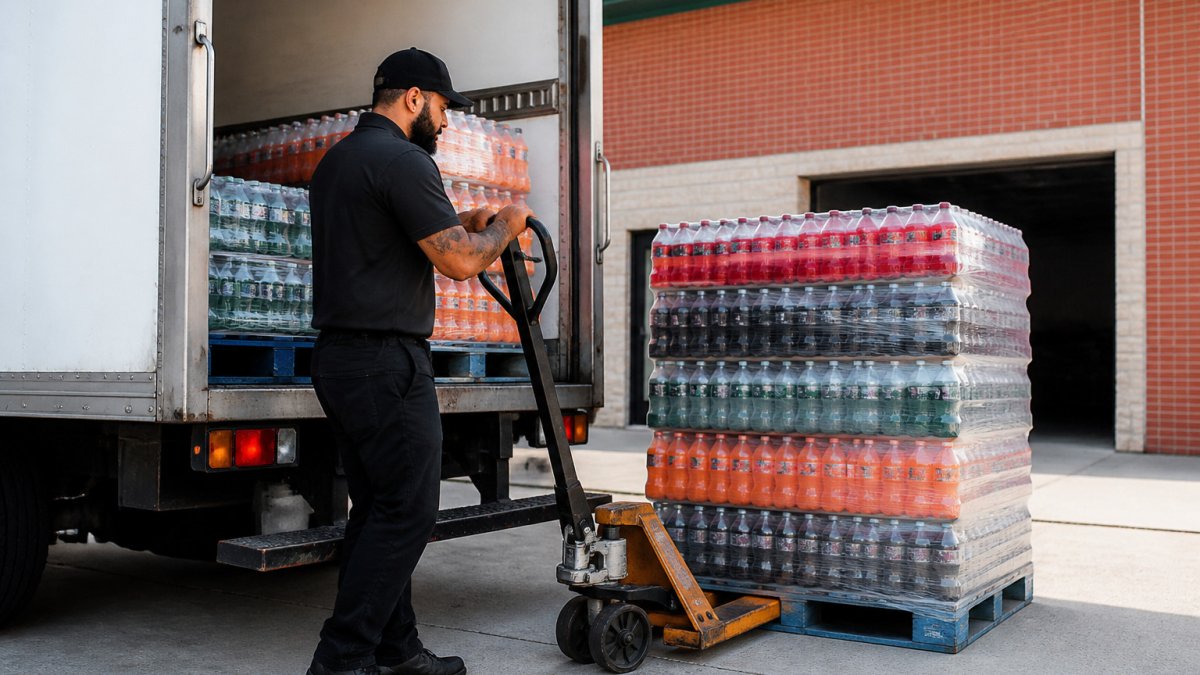
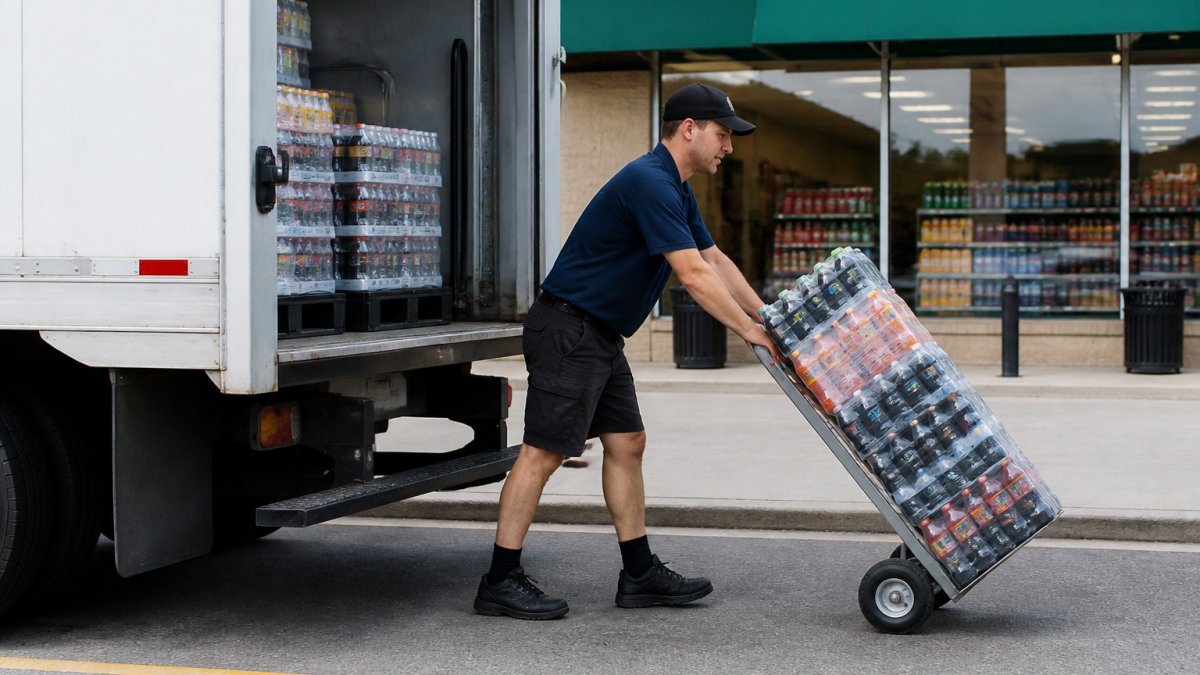
DSD work is physically demanding in ways easy to underestimate from a job description. A typical shift involves 8-10 hours on your feet, repeated lifting of 40-50 pound cases, overhead reaching, and ladder or step-stool work in retail aisles.
OSHA's general duty clause requires employers to provide a workplace free of recognized hazards, and its materials-handling guidance applies to route work: drivers should be trained on lifting technique, should not lift beyond safe limits without assistance or equipment (hand trucks, dollies), and have the right to report unsafe conditions.
Food Safety and Product-Handling Requirements
For routes carrying food and beverages, additional requirements apply. Under the FDA Food Safety Modernization Act (FSMA), certain facilities and carriers must follow sanitary transportation practices, temperature control for refrigerated product, vehicle cleanliness, and protection from contamination. Drivers handling refrigerated or frozen product are typically trained on temperature logs and cold-chain integrity, and many retailers require food-handler certification or proof of food-safety training for back-room access, even where state law does not mandate it.
Insurance and Motor Carrier Authority
A driver operating a commercial vehicle for a business is generally covered under the employer's commercial auto policy, not a personal one. Independent distributors and owner-operators typically must carry their own commercial auto liability coverage and, where applicable, register operating authority with FMCSA. Minimum liability limits vary by state and vehicle weight.
What Employers Actually Prefer (Not Legally Required)
Beyond the legal floor, hiring managers weigh preferences that are not regulations:
- Prior route or delivery experience, often 1-2 years, though many employers train the right candidate.
- Familiarity with handheld order-entry and proof-of-delivery software, a strong differentiator, since training time is a real cost.
- Local geography knowledge, reduces ramp-up time on a new territory.
For how employers manage these obligations day to day, see Managing DOT Compliance for Small Distributors. Candidates weighing the physical side of the role can review Physical Demands of Route Delivery Jobs for route-type-specific detail.
DSD Route Driver Job Description and Daily Workflow
A typical DSD route driver's day follows a predictable structure: pre-route vehicle inspection, delivery and restocking at multiple retail locations, order taking and inventory management, customer service, and end-of-day documentation.
Order Taking and Inventory Management
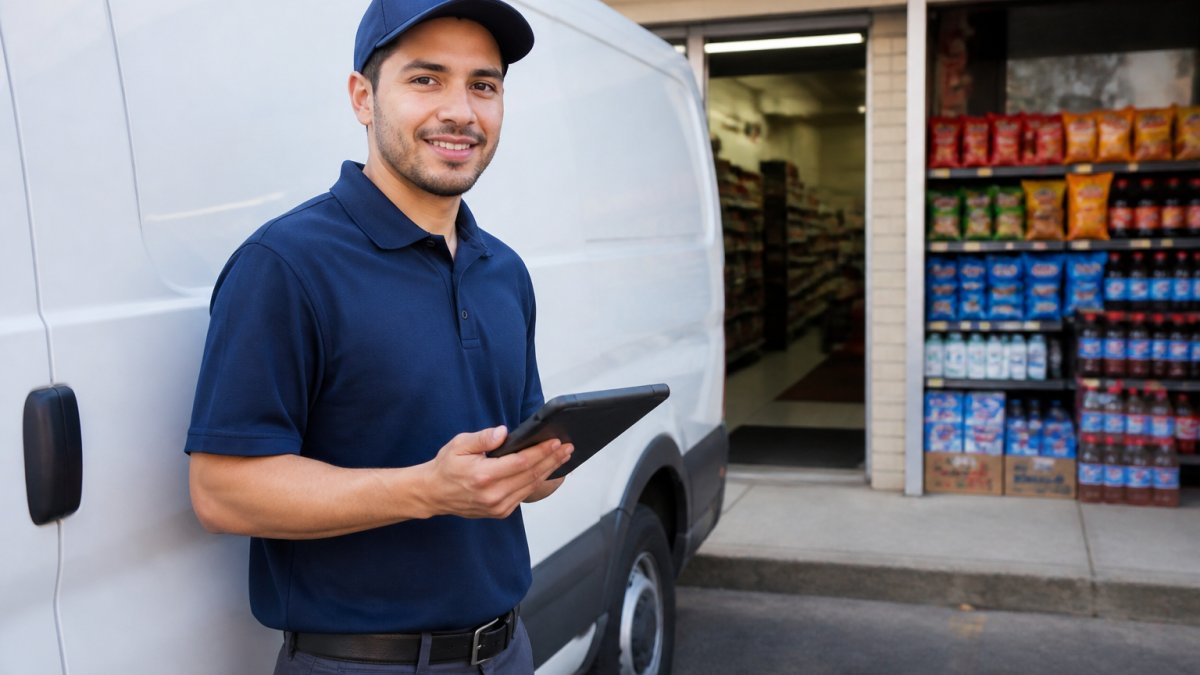
Route drivers begin each stop by scanning the retailer's inventory using mobile or tablet-based ordering systems, identifying what is in stock, what has sold through, and what needs replenishment.
Inventory management requires understanding shelf dynamics: fast movers need frequent replenishment, slow movers need careful stock control to prevent overstock, and promotional items demand flexibility.
Order taking varies in time per stop, depending on store size and assortment.
Merchandising and Customer Service
Merchandising extends beyond placing products on shelves. Drivers arrange products by brand, size, and flavor, rotate stock so older product sells first, remove damaged or expired items, and maintain attractive presentation, well-merchandised shelves outperform poorly organized ones.
Customer service interactions with store managers and retail staff influence repeat business and route profitability.
Proof of Delivery and Route Accounting
At the end of each stop, drivers generate proof of delivery documentation confirming what was delivered, quantities, prices, and customer signature.
Route accounting tallies sales, returns, promotional deductions, and driver commissions. Drivers must reconcile daily records with company systems and resolve discrepancies, since errors directly reduce commission or create disputes.
Vehicle and Equipment Standards for DSD Routes
The delivery vehicle functions as a mobile warehouse. DSD vehicles must meet standards for cargo capacity, temperature control, safety equipment, and regulatory compliance.
Vehicle standards include working refrigeration for chilled products, secure cargo restraints to prevent shifting, and adequate lighting for early morning and evening stops.
Equipment standards extend to handheld devices, scanners, and tablets used for order entry and proof of delivery.
Direct Store Delivery Route Accounting and Compensation
Compensation is where DSD route requirements stop being about qualifications and start being about economics. Two very different arrangements exist, and conflating them is the most common source of mismatched expectations: employed route drivers (W-2, paid by an employer) and independent distributors or owner-operators (1099 or route-ownership arrangements, responsible for their own costs).
How Route Accounting Drives Pay
Route accounting reconciles what was loaded onto the truck, what was delivered, what was returned, and what was sold, then converts that into driver compensation. The core equation is simple even when the software is not:
Sales − returns − promotional deductions − damaged/expired product = net route sales, and commission is calculated on net route sales, not gross load value. That distinction matters: a driver who loads heavily and returns heavily can show strong gross numbers and weak net pay.
Common commission structures include:
- Percentage of net sales, frequently in the 3-8% range depending on product category and territory, with beverage and snack routes often at the lower end and specialty or high-margin categories higher.
- Flat rate per case or per account, predictable, and common where product mix is uniform.
- Blended base plus commission, a guaranteed base with incentive on top, which reduces earnings volatility for newer drivers.
Employed Driver Economics
An employed DSD driver typically receives a base wage or salary plus commission or incentive, with the employer covering the vehicle, fuel, maintenance, insurance, and product liability. The driver's exposure is limited to time and performance. Earnings vary widely by territory and product category; established routes in dense, high-velocity territories generally out-earn new routes in thin territories, because commission scales with sales volume and stop density.
Independent Distributor and Route-Ownership Economics
Independent distributors buy or contract for a route and bear the operating costs. Startup and ongoing cost categories include:
- Route purchase or distribution agreement fee, where routes are sold, the price is set by the market and the seller, not by a regulator, and varies enormously by territory size and sales volume.
- Vehicle, purchase or lease of a step van or box truck, plus upfit for shelving and, where needed, refrigeration.
- Commercial auto and cargo insurance, required, and priced by vehicle class, territory, and driving record.
Realistic profitability depends less on gross sales than on stop density, average drop size, return rate, and expense discipline. A route with high sales but long drive times between stops can net less than a tighter route with lower gross. Prospective independent distributors should model per-stop margin and per-mile cost, not just top-line sales.
The Expense Categories That Decide Profitability
Route economics come down to a handful of levers:
- Stops per day and drive time between stops, the single biggest efficiency driver.
- Average revenue per stop, larger drops spread fixed costs across fewer stops.
- Return and stales rate, every returned case is cost without revenue.
- Promotional chargebacks, retailer promotions can quietly reduce net pay if not understood up front.
- Vehicle cost per mile, fuel, maintenance, and insurance combined.
Compensation Questions to Ask Before Accepting a Route
- Is pay based on gross or net sales, and how are returns and stales treated?
- Who pays for fuel, maintenance, insurance, and vehicle upfit?
- Are promotional allowances charged back to the route?
Understanding these mechanics separates a route that pays reliably from one that consumes the driver's margin. The requirements that matter most at this stage are financial literacy and the discipline to ask for net numbers before signing.
DSD Route Management Software and Mobile Technology
Modern DSD operations rely on specialized software platforms for route planning, order management, inventory tracking, and proof of delivery.
Route management software optimizes delivery sequences, reducing travel time and increasing stops per day. Mobile technology lets drivers access product information, pricing, promotions, and customer history during stops, enabling faster decision-making and more consultative selling.
Drivers must demonstrate comfort with mobile technology, including touchscreen interfaces, barcode scanning, and data entry.
Route Readiness Checklist and Common Pitfalls
Before accepting a DSD route position, evaluate readiness across several dimensions. A route-readiness assessment helps candidates identify gaps and determine whether specific opportunities align with their capabilities.
Route Readiness Assessment:
| Readiness Factor | Assessment Question | Red Flag |
|---|---|---|
| Licensing | Do you hold a current CDL and valid DOT medical certificate? | Expired or missing CDL; medical certificate expiring within 3 months |
| Physical Capability | Can you comfortably lift cases repeatedly throughout a workday? | History of back injuries; current physical limitations; age-related concerns without recent fitness assessment |
| Customer Service | Do you enjoy building relationships and solving problems collaboratively? | Preference for minimal interaction; difficulty with difficult personalities; conflict-avoidant tendencies |
| Technical Proficiency | Are you comfortable learning new software systems and troubleshooting basic device issues? | Resistance to technology; poor smartphone skills; difficulty with digital interfaces |
| Route Geography | Does the assigned route territory match your transportation situation and time availability? | Excessive commute distance; family obligations during early morning or evening hours; unreliable transportation |
| Sales Orientation | Do you take initiative to identify opportunities and drive sales growth? | Passive approach to customer interactions; resistance to upselling; focus only on completing deliveries |
Common pitfalls include underestimating physical demands, misunderstanding compensation structures, and failing to build customer relationships.
Another frequent mistake involves route selection. Accepting an underperforming route expecting to quickly build sales often leads to frustration.
Finding Your Next DSD Route Position
DSD Route Sales Connections specializes in connecting experienced route professionals with quality employers across the beverage, snack, bakery, and general merchandise industries.
The job search begins with identifying routes that align with your qualifications and preferences. Consider route territory, product category, compensation structure, and employer reputation. DSD Route Driver Resume Tips: Stand Out to Employers provides guidance on positioning your experience effectively during the application process.
For comprehensive information on locating DSD positions, How to Find Direct Store Delivery Jobs in 2026 covers the full landscape of opportunities, application strategies, and employer evaluation criteria.
The most successful route placements occur when candidates understand their capabilities, employers understand candidate qualifications, and both parties have realistic expectations about route performance and compensation.
Frequently Asked Questions
Do DSD route drivers need a commercial driver's license?
Whether a DSD route requires a Commercial Driver's License (CDL) depends on the vehicle's Gross Vehicle Weight Rating (GVWR). A CDL is generally required for a vehicle with a GVWR of 26,001 pounds or more. Many DSD routes operate vehicles below this federal threshold and require only a standard driver's license. Even routes with lighter vehicles often require a standard driver's license plus DOT medical certification. Always confirm the specific CDL requirement with the employer.
What qualifications do you need to work a DSD route?
Direct store delivery driver requirements include a valid driver's license (CDL for heavier vehicles), a clean driving record, DOT medical certification, and the ability to pass a background check and drug screening. You need physical capability to lift products, strong customer service skills, and experience with inventory management or sales. Many employers prefer 1-2 years of delivery or retail experience.
What does a direct store delivery driver do at each store?
At each store, DSD route drivers take orders, manage inventory replenishment by checking stock levels and rotating older products forward, merchandise products on shelves according to brand guidelines, and collect payment or document charges. They also gather proof of delivery data using mobile technology, answer customer questions, and report any issues back to their distributor. The entire process varies in time per store depending on location and product count.
How does DSD route accounting work?
Direct store delivery route accounting tracks sales, cash collected, product inventory, and expenses for each route. Drivers record orders and payments using mobile software or tablets, which syncs with the distributor's system. Route accounting includes reconciling cash, tracking product returns or damaged goods, documenting fuel and mileage, and calculating commissions or bonuses. Most DSD software automates these calculations to reduce manual errors and speed up pay cycles.
What equipment and documents do DSD route drivers need?
Route drivers need a valid driver's license and CDL (if applicable), DOT medical certificate, proof of insurance, and vehicle registration. Equipment typically includes a delivery vehicle, handheld tablet or mobile device with DSD software, barcode scanner, cash bag or payment terminal, product samples, and order forms. Some routes require reflective safety vests, thermometers for temperature-sensitive products, and a vehicle inspection log for compliance.
What are the main challenges of working a DSD route?
DSD route challenges include early start times, physical demands of lifting and stocking, route inefficiency due to traffic or store delays, managing cash and inventory accountability, and handling customer complaints or store access issues. Weather impacts, vehicle breakdowns, and tight delivery windows add operational complexity. Many routes require weekend or holiday work, and compensation depends on sales performance, which creates income variability.
What is a direct store delivery route?
A direct store delivery (DSD) route is a delivery path where a route driver represents a manufacturer or distributor and delivers products directly to retail stores, bypassing traditional warehouse distribution centers. The driver stocks shelves, takes orders, manages inventory, and handles sales on behalf of the supplier. DSD routes are common in beverage, snack, bakery, and general merchandise industries and allow faster product availability and stronger retailer relationships than warehouse delivery.
How is DSD route management software used?
DSD route management software enables drivers to record orders, manage inventory, collect payments, and capture proof of delivery on mobile devices. The system optimizes route planning, tracks real-time location data, and syncs information with the distributor's backend systems. Software automates route accounting, calculates commissions, generates performance reports, and alerts managers to issues like missed stops or payment discrepancies, improving operational efficiency and reducing manual paperwork.
Finding the right DSD route position requires more than a resume, it demands understanding what employers actually need and demonstrating that you meet those requirements. DSD Route Sales Connections connects thousands of experienced route drivers with verified employers nationwide, streamlining the hiring process with features built specifically for the direct store delivery industry. Search DSD jobs today to find positions that match your qualifications and career goals.