 ultimate-guide
Hiring Route Sales Reps for Small Distributors: 2026 Guide
Table of Contents
- Hiring Route Sales Reps for Small Distributors: What Makes It Different
- Route Sales Representative Job Description: What to Include
- Where to Find Experienced Route Sales Candidates
- The Route Sales Hiring Process: From Application to Offer
- Route Sales Representative Interview Questions That Reveal Real Fit
- Route Sales Representative Onboarding: Getting Reps Productive Faster
- Compensation and Retention: Competing With Larger Employers
- Frequently Asked Questions
Last Updated: October 7, 2026
Hiring Route Sales Reps for Small Distributors: What Makes It Different
Hiring route sales reps for small distributors is a fundamentally different job than it is for a national beverage company with a recruiting department. At DSD Route Sales Connections, we see the same pattern repeat: a regional distributor needs someone who can drive a box truck, merchandise a store, and close a reorder conversation, all before 10 a.m. The problem is that most hiring advice is written for companies with an HR team, an applicant tracking system, and a recognizable brand name. You have none of those advantages, and you do not need them.
A common mistake is copying the job posting a large distributor runs. Their posting attracts volume because of their name; yours has to attract the right person through specificity.
Below, we break down the full process, from writing a job description that filters out the wrong applicants to onboarding a new rep so they are running a clean route within their first few weeks.
Route Sales Representative Job Description: What to Include
A route sales representative job description should state the route, the schedule, the physical demands, and the pay structure in the first five lines. Everything else is secondary.
Most small distributors bury the details that candidates actually care about. The result is a flood of applications from people who cannot start at 4 a.m. or cannot lift cases repeatedly. Write the description so the wrong candidates self-select out.
Core Responsibilities and Daily Expectations
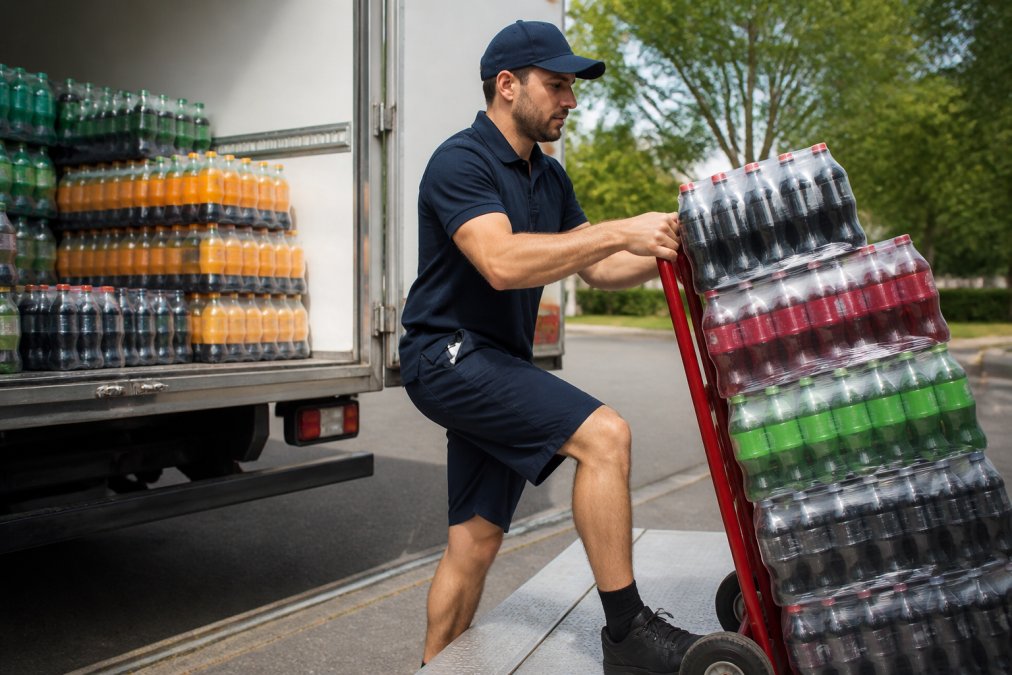
Spell out what the day looks like. A route sales rep typically loads the truck, drives a fixed route, stocks shelves, rotates product, checks in with store managers, writes orders, and reconciles returns. Include the number of stops, the average route length, and whether the rep handles cash or invoicing.
If the route involves overnight stays or a rotating schedule, say so. Hidden schedule details are the single biggest source of early turnover.
Qualifications, Licenses, and Physical Requirements
List the license requirement plainly. Many route sales roles require a standard driver's license, while others need a Commercial Driver's License and a DOT medical card. If the role requires a CDL, state it in the title, not buried in the body.
Physical requirements belong in the posting too. Case weights, pallet jack use, and repeated bending are real parts of the job. Being upfront here saves everyone a wasted interview. For guidance on driver qualification and medical standards, see the Federal Motor Carrier Safety Administration driver resources.
Where to Find Experienced Route Sales Candidates
The best route sales candidates are usually already working a route somewhere else, so they are not browsing general job boards on their lunch break. You have to go where DSD people actually look.
Three channels tend to work for small distributors:
- A DSD-specific job board. General boards bury route sales listings under warehouse and gig-driving posts. A board built for Direct Store Delivery puts your posting in front of people who already understand the work.
- Referrals from your current reps. Route drivers talk to drivers at other distributors every day. A referral bonus paid on the new hire's 90-day mark tends to produce better candidates than any paid ad.
- Direct outreach at the stores you already serve. Store managers know which vendor reps are reliable and which are looking to move. That is a warm introduction you cannot buy.
DSD Route Sales Connections exists for exactly this reason: a nationwide marketplace where experienced route drivers and sales representatives see fresh listings from real employers, with a direct application process and no middlemen. We have 53+ verified employers posting across five states, and candidates apply straight to you.
The Route Sales Hiring Process: From Application to Offer
The route sales hiring process should take days, not weeks. Good reps get multiple offers, and the distributor who moves first usually wins.
A workable sequence for a small distributor:
- Same-day review. Screen applications within 24 hours. A posting that sits for a week reads as a company that runs slow.
- A short phone screen. Ten to fifteen minutes covering schedule, license status, and pay expectations.
- An in-person or ride-along interview. Nothing reveals fit like a few hours on an actual route.
- Background and driving record check. Run this before the offer, not after.
- Offer within 48 hours of the final interview. Speed signals that you respect the candidate's time.
Screening and Background Checks
For any driving role, verify the license class, the driving record, and the DOT medical card status. If the position is safety-sensitive and regulated, the employer is responsible for the required checks, and a small distributor without an HR department still carries that responsibility. The U.S. Department of Transportation publishes the compliance basics, and a third-party screening service can run the record pull for a modest fee.
Do not skip the driving record check to save time. A bad hire behind the wheel is the most expensive mistake a distributor can make.
Route Sales Representative Interview Questions That Reveal Real Fit
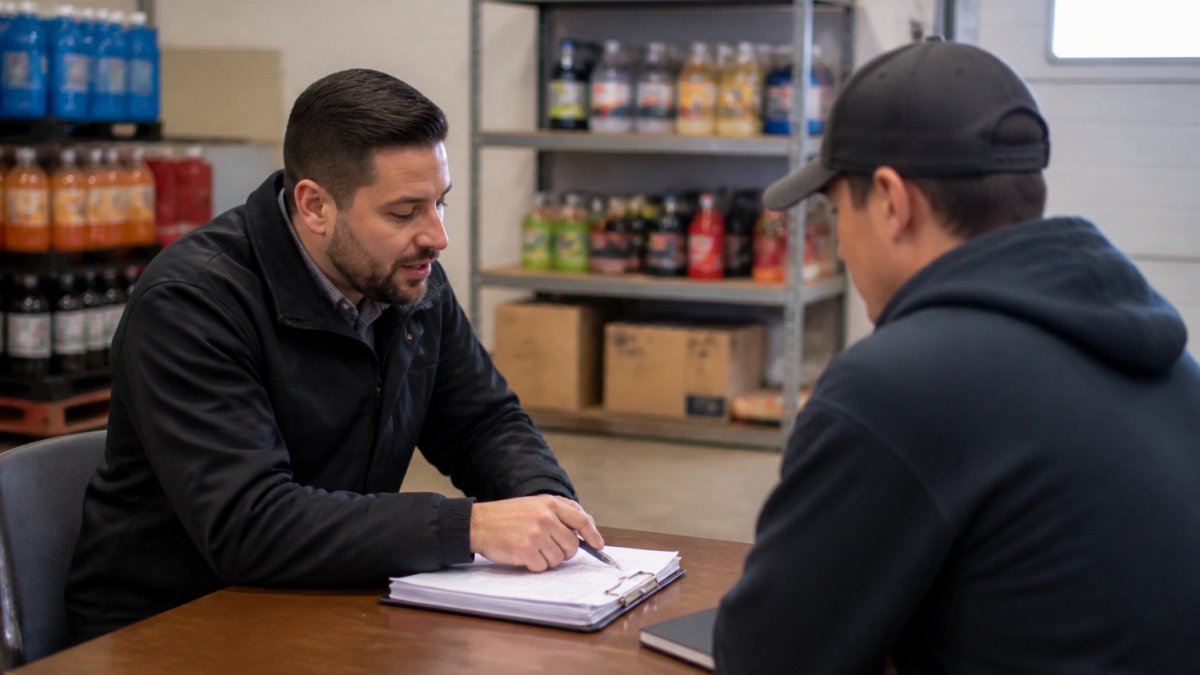
Route sales representative interview questions should test how a candidate handles a real route problem, not whether they can recite a script. The best questions have no single right answer, because you are judging judgment.
Try these:
- "Walk me through your last route. How many stops, and how did you sequence them?"
- "A store manager tells you your product is not selling and wants to cut your space. What do you do?"
- "You are running 45 minutes behind because of a delayed delivery. How do you decide what to skip?"
- "Tell me about a time a customer refused a delivery. How did you handle it?"
- "Why are you leaving your current route?"
Listen for specifics. A candidate who gives you stop counts, product names, and store situations has actually run a route. A candidate who speaks only in generalities has not.
Route Sales Representative Onboarding: Getting Reps Productive Faster
Route sales representative onboarding determines whether a new hire stays past 90 days. A rep who feels lost in week one starts looking for another job in week three.

Structure the first two weeks deliberately:
- Days 1-2: paperwork, vehicle walkthrough, safety and DOT compliance review.
- Days 3-5: ride the route with your best rep and shadow every stop.
- Week 2: run the route with the trainer riding along, correcting in real time.
- Week 3: solo route with a daily check-in call.
Pair the new rep with a strong mentor, not just any available driver. The habits they pick up in the first month stick for years.
Compensation and Retention: Competing With Larger Employers
You will not out-pay a national distributor on base salary, so do not try. Compete on the parts of the job that large employers cannot match: route ownership, a consistent schedule, and a direct line to the owner.
What actually retains route sales reps at small distributors:
- A clear commission or bonus tied to route performance. Reps who see their effort in their paycheck stay.
- Route stability. Frequent route changes push people out the door.
- A real path forward. A rep who can grow into a lead or account role has a reason to stay.
- Fast answers. When a rep has a problem, the owner picks up the phone. That is your advantage.
When you post the role, be honest about the pay structure. A rep who discovers the commission terms were vague will leave, and they will tell other drivers. For context on legitimate pay and classification practices, review the U.S. Department of Labor wage and hour guidance.
The hardest part of growing a small distribution business is not finding product to sell. It is finding reps who will run the route the way you would run it yourself, and keeping them once they are trained. DSD Route Sales Connections was built for that exact problem: a nationwide job board for Direct Store Delivery professionals, with verified employers, a direct application process, and no middlemen between you and experienced route talent. Post your route sales opening and reach thousands of drivers and sales reps who already know the work. Search jobs or post a listing with DSD Route Sales Connections and hire qualified DSD talent fast.
Frequently Asked Questions
Where can small distributors find experienced route sales representatives?
Specialized DSD job boards reach candidates who already understand route delivery, which general job sites cannot match. Industry-specific platforms put your posting in front of drivers and sales reps actively looking in the beverage, snack, and bakery sectors. Beyond job boards, ask current reps for referrals, contact beverage and snack wholesalers in your area, and attend regional trade events. Referrals from your existing team often produce the fastest hires because those candidates already know the work.
What should a route sales representative job description include?
A strong route sales representative job description covers five areas: daily responsibilities like stocking, merchandising, and order writing; required licenses such as a valid driver's license or CDL; physical demands including lifting cases up to 50 pounds; schedule details including early start times and weekend rotation; and compensation structure with base pay plus commission. Be specific about the route territory and vehicle type. Vague descriptions attract unqualified applicants and waste your screening time.
How long does it take to hire a route sales representative?
Most small distributors fill a route sales position in two to four weeks when they post on a DSD-specific job board and move quickly through screening. The timeline depends on how fast you review applications, schedule interviews, and complete background and motor vehicle record checks. Delays usually come from slow internal decisions, not candidate availability. Set a 48-hour application review window and a same-week interview slot to keep strong candidates from accepting another offer first.
What questions should you ask in a route sales representative interview?
Ask about specific route experience: how many stops they handled daily, which DSD categories they worked in, and how they managed inventory shrinkage. Behavioral questions work well, such as asking them to describe a time a store rejected a delivery and how they resolved it. Also ask about early morning availability and physical stamina, since these are the two reasons new hires quit fastest. Their answers about past routes tell you more than any hypothetical scenario.
How can a small distributor compete with larger employers for route sales talent?
Compete on schedule flexibility, route ownership, and speed of hiring rather than salary alone. Many experienced reps prefer smaller distributors because they get a consistent territory, direct access to management, and less corporate bureaucracy. Offer a clear path to a dedicated route within the first 90 days. Move through your hiring process faster than large companies, which often take weeks to schedule interviews. A quick offer with a defined territory beats a higher base pay at a company where routes rotate constantly.
How can distributors reduce turnover among route sales representatives?
Turnover drops when onboarding sets clear expectations in the first two weeks. Pair new reps with an experienced driver for ride-alongs before they run a route alone. Pay competitively for your market and tie commission to route performance so reps see the connection between effort and earnings. Check in at 30, 60, and 90 days to catch problems early. Most route sales reps who quit cite unclear expectations or inconsistent schedules, both of which you can fix during onboarding.