 how-to
How to Find Direct Store Delivery Jobs in 2026
Table of Contents
- What Is Direct Store Delivery and Why Choose It?
- Step 1: Identify the Right DSD Roles for Your Experience
- Step 2: Search for Direct Store Delivery Jobs by Location
- Non-CDL Delivery Driver Jobs: Routes Without a Commercial License
- Step 3: Meet DSD Independent Operator Requirements
- Step 4: Ace the Interview with DSD Driver Interview Questions
- Step 5: Apply and Evaluate Job Offers
- Conclusion
- Frequently Asked Questions
Last Updated: September 9, 2026
What Is Direct Store Delivery and Why Choose It?
Direct store delivery (DSD) is a distribution model where suppliers deliver products directly to retail locations, bypassing the retailer's central warehouse. For drivers, this means you are not just dropping boxes at a loading dock; you are stocking shelves, building displays, and managing inventory at each stop. Direct store delivery jobs offer a blend of driving, physical work, and customer relationship building that traditional trucking routes rarely provide.
At DSD Route Sales Connections, we specialize in this exact industry, connecting experienced route drivers with employers across the beverage, snack, and bakery sectors.
Below, we will walk through the exact steps to find these roles, meet the requirements, and land an offer. We will also cover the differences between employee and independent operator models, what non-CDL routes involve, and the interview questions you should prepare for.
Step 1: Identify the Right DSD Roles for Your Experience
Not all DSD positions demand the same background. Your first move is matching your experience to the right role type. A common mistake is applying broadly without understanding the specific demands of each route.
- Route Sales Representative: Handles a set territory, builds displays, and manages shelf inventory. Best for those with merchandising experience.
- Delivery Driver: Focuses on transport and delivery, with light stocking duties. Often the entry point into DSD.
- Independent Distributor: Owns or leases a route and operates as a business owner. Suits experienced drivers with capital and management skills.
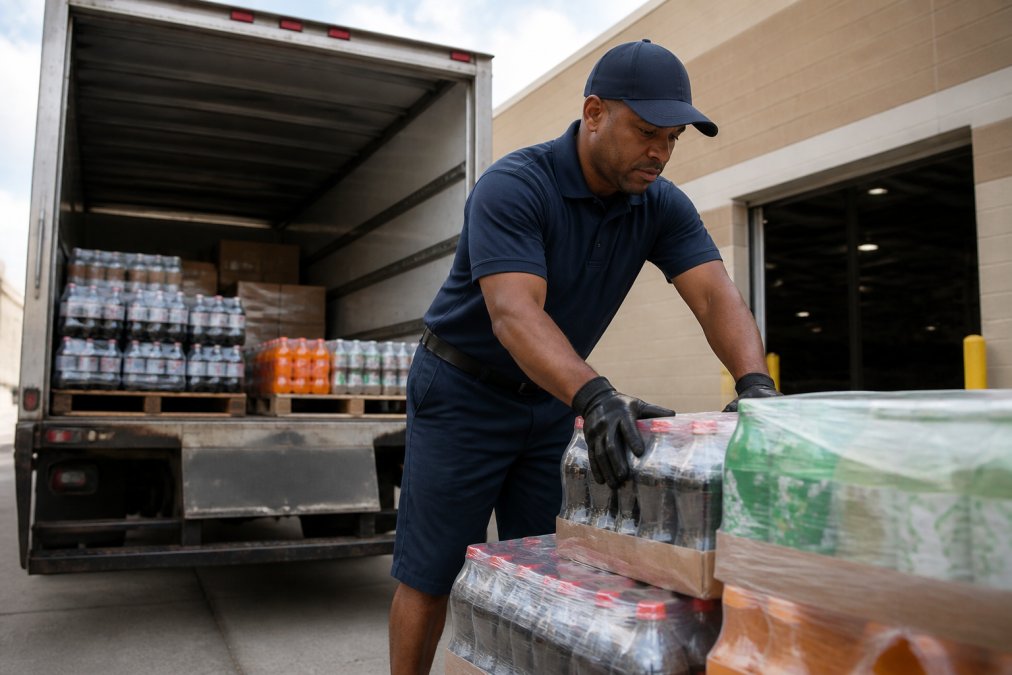
Consider the physical demands and schedule honestly. Many routes start early in the morning to stock shelves before stores open. If you prefer consistent hours without sales pressure, a straight delivery role fits better than a route sales position.
Step 2: Search for Direct Store Delivery Jobs by Location
A generic search for "delivery jobs" will bury you in irrelevant results. DSD hiring is hyper-local and often relationship-driven, so your search strategy needs to be just as targeted. Here is the step-by-step process that works.
1. Map Your Target Employers First
Before you type a single keyword, identify the companies that operate DSD networks in your area. The model is dominated by major brands in specific sectors. In beverages, think of the major distributors for Coca-Cola, PepsiCo, and Keurig Dr Pepper. In snacks, look at Frito-Lay, Utz, and Snyder's-Lance. In bakery, companies like Bimbo Bakeries USA and Flowers Foods run extensive direct-to-store operations. Make a list of the top 10 distributors for your target product category within a 50-mile radius of your home.
2. Go Directly to the Source
Once you have your list, bypass the aggregators. Go to the careers page of each company's website. Large distributors often have dedicated portals for "Route Sales" or "Direct Store Delivery" positions. For example, a major beverage distributor might list openings for "Merchandiser" or "Route Sales Representative" that never appear on national job boards. This direct approach also ensures you are seeing current, unfiltered openings.
3. Use Niche Job Boards and Aggregators
General job boards are noisy. While you should still use them, filter your search with the right Boolean strings. On a site like Indeed or LinkedIn, search for: ("direct store delivery" OR "route sales" OR "DSD") AND ("non-CDL" OR "box truck") AND "your city". This returns far more relevant results than a simple keyword search. Also, check specialized logistics and supply chain job boards, which often have a dedicated category for route-based roles.
4. Leverage the Power of the "Hidden" Job Market
Many DSD jobs are filled before they are ever posted. The industry is small, and store managers often know which drivers are looking to move. Your best strategy is to network directly. Visit the stores you want to service during non-peak hours (typically after 9:00 AM). Introduce yourself to the store manager or the receiving manager. Ask them, "Who handles your direct store delivery for [Product X]? I'm looking for a route position and would like to speak with them." This can give you the name of the local route supervisor or the independent distributor who owns that route. A direct call to that person can put you ahead of the application queue.
5. Set Up Alerts and Act Fast
DSD routes are local, and when a driver retires or moves, the position needs filling quickly. Do not check job boards once a week. Set up daily email alerts on all the platforms you use. When a relevant posting appears, apply the same day. A delay of 48 hours can mean the difference between an interview and a closed requisition.
Non-CDL Delivery Driver Jobs: Routes Without a Commercial License
Many DSD routes do not require a commercial driver's license (CDL). Non-CDL delivery driver jobs typically involve smaller vehicles, like box trucks under 26,001 pounds, which fall below the threshold that triggers CDL requirements.
These roles are ideal if you want to enter the industry without the cost and time of CDL training. However, you should still expect to pass a DOT physical, a background check, and a drug screening. Some employers provide on-the-job training for their specific equipment and route processes.
A key distinction: non-CDL routes often carry lighter loads and make more stops per day. You will spend more time merchandising and less time driving. This suits candidates who enjoy store-level interaction and product placement work. If your goal is long-haul trucking, a CDL route is the better path, but for local, consistent work, non-CDL DSD is a strong option.
Step 3: Meet DSD Independent Operator Requirements
Becoming an independent distributor is not just a job change; it is a business acquisition. This path offers the highest earning potential and autonomy, but it carries significant financial risk. Understanding the mechanics of this model is critical before you commit.
The Two Main Entry Models
There are two primary ways to become an independent operator, and they are not the same.
-
Route Purchase: You buy an existing, operating route from a distributor or a retiring operator. The purchase price is typically based on a multiple of the route's annual gross profit. A common rule of thumb in the industry is that a route sells for 1.5 to 2.5 times its annual net profit, but this varies wildly by territory, product, and contract terms (franchise.org). You are buying the customer relationships and the contractual right to service those stores.
-
Franchise or Lease Model: Many large companies, particularly in the beverage and snack sectors, offer franchise opportunities. You pay an initial franchise fee (which can range from tens of thousands to over one hundred thousand dollars depending on the brand) and then lease the rights to a specific territory. You are also typically required to lease or purchase a delivery vehicle that meets the company's branding and specification standards.
The Real Cost Breakdown
Your upfront capital needs go beyond the route purchase price. You must secure:
- The Route Acquisition Cost: The initial payment for the route or franchise rights.
- A Commercial Vehicle: A new, branded box truck can cost between $50,000 and $90,000 (fleetowner.com). Many operators finance this, but a substantial down payment is usually required.
- Initial Inventory: You will need to purchase the initial stock of product to fill your truck and service your stores. This can be $10,000 to $20,000 depending on the product's density and value.
- Working Capital: You need a cash buffer to cover fuel, maintenance, and your own living expenses for the first 60-90 days, as payments from retailers (and the companies you distribute for) often lag.
- Legal and Insurance: You must form a legal entity (LLC or S-Corp), secure commercial auto insurance, general liability insurance, and workers' compensation if you plan to hire help. The Small Business Administration guidance on business planning is a good starting point for structuring this.
The Contract and Territory
Your relationship with the parent company is defined by a distribution agreement. This is a legal contract that specifies your territory boundaries, performance metrics, and the terms under which the company can terminate the agreement. Before signing, have an attorney who understands franchise law review it. Key clauses to scrutinize include:
- Right of First Refusal: Does the company have the right to buy the route back from you if you decide to sell?
- Performance Standards: What are the minimum sales or service levels you must maintain? What happens if you miss them?
- Territory Protection: Can the company open a new warehouse or add a new distributor that encroaches on your territory?
The Transition Path
Many operators do not start with a full buy-in. A safer path is to start as an employee driver for a distributor that offers a "lease-to-own" or "driver-to-owner" program. In this model, you run a route as an employee for a year or two, proving your reliability and learning the business. The company may then offer you the chance to lease that same route, with a portion of your weekly pay going toward the eventual purchase. This dramatically reduces your startup risk and gives you a real-world test of whether you want the responsibility of ownership.
Step 4: Ace the Interview with DSD Driver Interview Questions
Interviews for DSD roles test more than your driving ability. Employers want to know how you handle store relationships, damaged product, and delivery delays. Preparation is your advantage. Review common DSD driver interview questions before you walk in.
Expect questions like: "Describe how you handle a store manager who rejects a delivery," or "How do you prioritize your stops when you are running behind schedule?" Your answers should demonstrate problem-solving and customer service focus.
Practice the STAR method (Situation, Task, Action, Result) to structure your responses. Prepare specific examples from your past experience, even if they are from outside the industry.
Step 5: Apply and Evaluate Job Offers
Once offers arrive, evaluate them against your priorities. Compare more than the hourly wage or salary. Look at route size, number of stops, product weight, and start times. A route with lighter cases and a shorter commute may be worth less pay.
Consider the employer's distribution network and stability. Ask about turnover in the territory you would cover. High turnover often signals an unreasonable workload or poor management.
When evaluating, remember that DSD work is a career path with advancement potential. Some employers promote from within to fleet operations or territory management roles. Ask about advancement during the interview to gauge long-term fit.
| Evaluation Factor | What to Check | Why It Matters |
|---|---|---|
| Route Territory | Number of stops, distance between stores | Determines daily pace and drive time |
| Product Type | Case weight, stacking requirements | Affects physical strain |
| Schedule | Start time, weekend frequency | Impacts work-life balance |
| Compensation Model | Hourly vs. route sales commission | Changes earning potential |
| Advancement Path | Promotion history, training programs | Indicates long-term opportunity |
Conclusion
Finding the right DSD role takes more than a generic job search. You need to match your experience to the route type, understand the licensing requirements, and evaluate offers on factors beyond pay. The industry rewards drivers who treat each stop as a partnership with the store, not just a drop-off point.
DSD Route Sales Connections connects you directly with employers across the beverage, snack, and bakery industries. Our platform lets you apply without middlemen. Get started with DSD Route Sales Connections and find a route that fits your life.
Frequently Asked Questions
Do I need a CDL for most direct store delivery jobs?
Many DSD positions do not require a CDL. A significant portion of route sales representative and merchandiser roles use non-CDL vehicles, such as box trucks under 26,000 pounds. However, larger delivery vehicles and certain bulk routes do require a commercial driver license. The job posting will specify the license class needed. If you lack a CDL, focus your search on non-CDL delivery driver jobs to find roles that match your qualifications.
What is the difference between a DSD driver and a standard delivery driver?
A standard delivery driver typically transports goods from a warehouse to a store, dropping them at the receiving dock. In contrast, a DSD driver, or route sales representative, delivers products directly to the sales floor, stocks shelves, builds displays, and manages inventory. This role combines delivery with merchandising and customer service, acting as the store-level support for their brands. It is a route sales position focused on the success of products within a specific territory.
How can I find local DSD job openings in my area?
Start by using a specialized job board like DSD Route Sales Connections, which focuses exclusively on the direct store delivery industry. You can also check the career pages of major distributors in your region and search for roles by your city and state. Networking with current route drivers and store managers can also alert you to openings before they are publicly posted.
What are the typical salary expectations for DSD delivery roles?
Earnings for DSD roles vary widely based on the employer, the product category, and the pay structure. Many positions offer an hourly wage, while others are paid a base salary plus commission or a route sales bonus. Independent distributors often have the potential for higher earnings based on route profitability. Review the specific job listing for salary details, and consider the total compensation package, including benefits and commission structures, when comparing offers.