 comparison
Route Sales vs Delivery Driver: Which Role Fits You
Quick Summary
Route sales vs delivery driver roles both involve driving a set route, but route sales adds selling, merchandising, and account building at each stop. Delivery drivers focus mainly on moving product on schedule. Route sales usually pays more through commission and bonuses, while delivery driver pay is steadier.
- Delivery drivers are judged on on-time delivery, accuracy, and safety.
- Route sales reps are also measured on sales volume, account growth, and display compliance.
- Route sales pay often combines a base with commission or bonuses.
- Route delivery driver jobs more often pay hourly or a fixed wage.
- Check whether a posting mentions sales targets before accepting a route sales job.
Table of Contents
- Route Sales vs Delivery Driver: The Core Difference
- Side-by-Side Comparison of the Two Roles
- Route Delivery Driver Responsibilities and a Typical Day
- Route Sales Representative Job Description and Sales Duties
- Pay Structure: Route Sales Representative Salary vs Driver Wages
- Route Sales Career Path and Advancement Opportunities
- Choosing Your Next Step: Which Role Matches Your Experience
- Frequently Asked Questions
Route Sales vs Delivery Driver: The Core Difference
Route sales and delivery driver jobs both put you behind the wheel on a set route, but the core difference is what you do once you arrive. A delivery driver's main job is moving product from a warehouse or store to customers on schedule. A route sales representative does that too, then adds the responsibility of selling, merchandising, and building customer accounts. Indeed route driver job description describes the delivery-centered role as moving purchased items to customers on schedule, which sets the baseline for comparison.
That extra sales layer changes almost everything else: pay, daily workload, skills, and long-term career options. If you want a role where you mainly drive and deliver, a delivery driver position fits. If you enjoy talking with store managers and growing business on your route, route sales is the better match. Our pick depends on which of those two daily experiences you want.
Side-by-Side Comparison of the Two Roles
The two roles share a lot. Both usually require a valid driver's license and a clean driving record, and route sales jobs in direct store delivery (DSD) may require a Commercial Driver's License (CDL), depending on the vehicle and employer. Both involve early starts, physical loading and unloading, and following a scheduled route. The differences show up in what happens at each stop and in how you are measured.
| Factor | Route Delivery Driver | Route Sales Representative |
|---|---|---|
| Main focus | Delivering product on schedule | Selling, merchandising, and delivering product |
| Customer contact | Brief, delivery-focused | Ongoing relationship building with store managers and buyers |
| Sales duties | Minimal or none | Upselling, new accounts, display placement, promotional compliance |
| Merchandising | Usually none | Rotating stock, setting up displays, checking planograms |
| Paperwork | Delivery confirmations, manifests | Delivery confirmations plus sales and inventory reporting |
| Typical skills | Driving, time management, safe lifting | Driving, sales, communication, basic math and inventory sense |
| Licensing | Driver's license; CDL for larger vehicles | Driver's license; CDL often required in DSD |
| Physical demands | Repeated lifting, loading, and unloading | Same, plus bending and reaching during merchandising |
| Pay structure | Usually hourly or fixed wage | Often base pay plus commission or bonus |
| Performance measures | On-time delivery, accuracy, safety | Sales volume, account growth, display compliance, on-time delivery |
| Advancement | Dispatch, training, lead driver, fleet operations | Larger routes, account management, territory or sales leadership |
Pros of route delivery driver:
- Simpler daily tasks with less pressure to sell
- Easier to learn if you have no sales background
- Clear, predictable scope of work
- Often steadier weekly income
Cons of route delivery driver:
- Fewer paths to higher earnings
- Less direct influence over account growth
- Pay can plateau unless you move into operations or supervision
Pros of route sales representative:
- Higher earning potential through commission and bonuses
- Builds transferable sales and account-management skills
- More variety in customer interactions
- Clearer path into sales leadership and territory management
Cons of route sales representative:
- Sales targets can add pressure
- Requires comfort with persuasion and customer conversations
- Income can swing with territory performance and seasonality
ZipRecruiter route sales vs delivery driver comparison notes that both roles require a valid driver's license, but route sales roles typically involve stronger sales skills and more customer interaction. That matches the pattern across most DSD postings.
Route Delivery Driver Responsibilities and a Typical Day
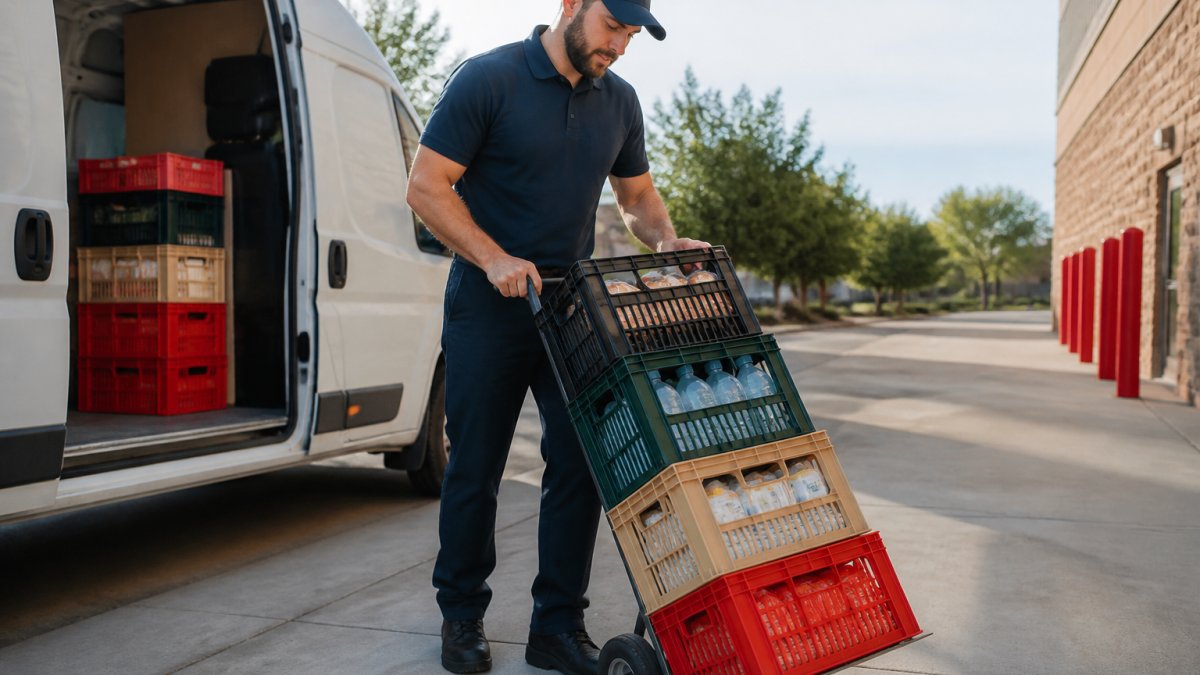
A delivery driver typically starts early, loads the truck, and follows a fixed route. Most of the day involves driving between stops, unloading product, and confirming deliveries. The work is physical, so expect lifting cases of beverages, snacks, or bakery goods throughout the shift.
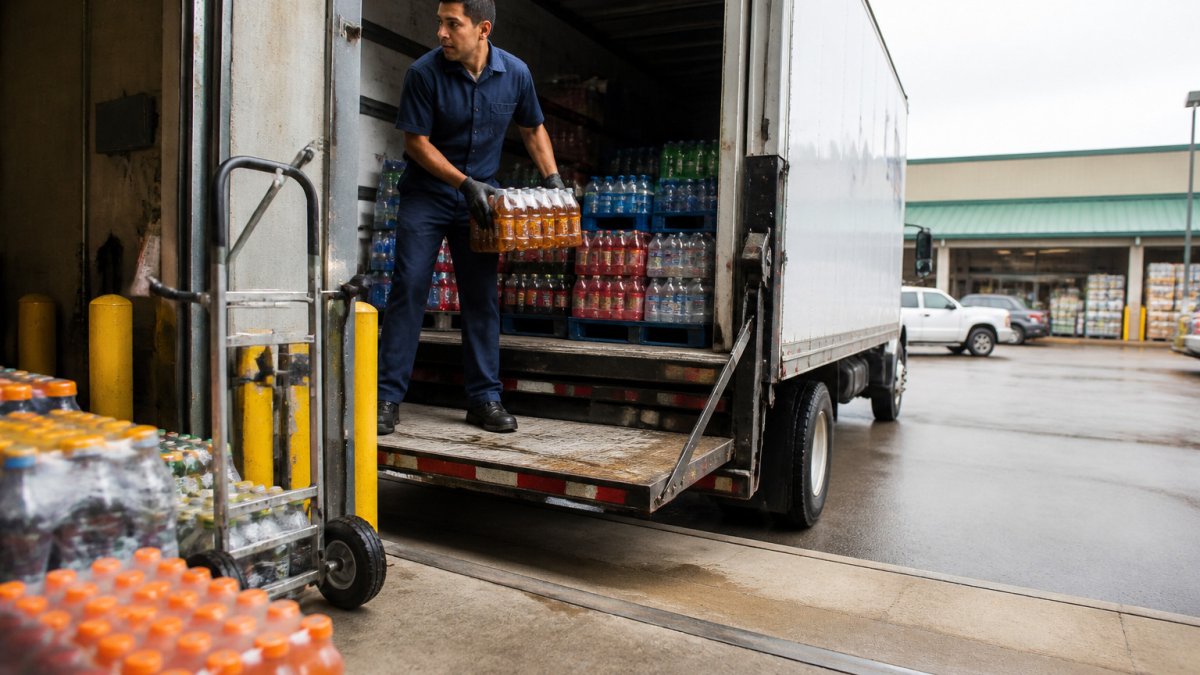
Your day is organized around the route schedule. Check the manifest, load in the order your stops require, and complete each delivery before the next window. U.S. Bureau of Labor Statistics delivery truck drivers and driver/sales workers outlines the core duties and training requirements for these occupations, which is a useful reference when comparing responsibilities across roles.
We recommend keeping a simple checklist for each stop. Confirm the delivery count, note any damaged product, and record any changes to the route. Small habits like these prevent most avoidable problems.
Route Sales Representative Job Description and Sales Duties
Route sales representatives do everything a delivery driver does, plus sales work at each stop. That can include placing new products on shelves, setting up promotional displays, recommending items to store managers, and pitching new accounts. Raise.me driver/sales worker overview describes driver/sales workers as delivery drivers with added responsibilities to recommend products to businesses and solicit new customers.
The sales portion is where route sales jobs separate themselves. A rep who consistently builds displays and suggests additional products usually grows account volume. Expect to track results, follow company sales goals, and report back on what sells and what doesn't.
Watch out: a route sales job that focuses only on deliveries may not match the sales expectations listed in the posting. Ask the employer how much of the day is sales work before you accept.
Pay Structure: Route Sales Representative Salary vs Driver Wages
Pay is where the two roles often diverge most, and it is also where job postings tend to be vague. Understanding the mechanics of each pay model helps you compare offers instead of just comparing headline numbers.
Delivery driver pay models. Most route delivery driver jobs pay one of three ways:
- Hourly wage. You are paid for hours worked, including overtime where applicable under the Fair Labor Standards Act. This is the most predictable model and the easiest to compare across employers.
- Fixed salary. Some employers pay a set weekly or annual amount regardless of hours. Ask whether overtime is expected and whether it is compensated.
- Route-based or stop-based pay. A smaller number of employers pay a flat amount per route or per stop completed. This can reward speed, but it can also push drivers to rush, so ask how quality and safety are measured.
Route sales pay models. Route sales representative compensation usually combines a base with variable pay:
- Base salary or hourly base that covers the driving and delivery portion of the job.
- Commission on sales volume, new accounts, or account growth on the route.
- Bonuses and incentives tied to displays placed, promotional compliance, or territory targets.
- Route-based pay in some DSD operations, where the rep effectively buys or owns the route's results.
That mix means two route sales reps with the same base can earn very different totals depending on territory, product category, and how aggressively the employer sets targets. A common pattern is that route sales roles carry higher upside but less predictable weekly income than delivery driver roles. Mastering the nuances of local delivery logistics often determines whether a route remains a steady paycheck or evolves into a high-commission career path.
Reading the numbers correctly. The U.S. Bureau of Labor Statistics publishes official wage estimates for driver/sales workers and delivery truck drivers, broken out by industry, state, and metropolitan area. Use those figures as a starting point, then compare actual postings in your area, because local demand and product category move pay more than national averages do. U.S. Bureau of Labor Statistics occupational pay data
Because pay varies by employer, territory, and product category, verify compensation details with each company before you commit, and ask current reps how their actual take-home compares with the posted range.
Route Sales Career Path and Advancement Opportunities
Route sales can open a path to supervisory, account management, or territory management roles. Reps who build strong account relationships often move into larger routes or lead sales teams. Delivery drivers can also advance, typically into dispatch, training, or lead driver positions, though the path often has fewer sales-based steps.
If long-term income growth matters to you, route sales usually offers more room to advance. You can explore the specific CDL routes and advancement opportunities available to see how this path could develop. Track your sales results, learn the company's distribution network, and ask your manager about advancement criteria early.
Choosing Your Next Step: Which Role Matches Your Experience
Start with your experience. Once you have picked a role, our application tips to stand out walk you through practical steps for applying. If you have a CDL and steady driving history but little sales background, a delivery driver role lets you earn while you learn the route system. If you have customer-facing or sales experience, route sales lets you use those skills and earn more.
Consider three questions: Do you enjoy talking with store managers? Are you comfortable with sales targets? Do you want a path to supervisory roles? Honest answers will point you toward the right role.
Our recommendation: apply for route sales if you have any sales experience, and take a delivery driver role if you want stable work with minimal selling. For guidance on finding reputable DSD driving jobs once you know which role fits, review the steps in this guide. Once you know which role fits, search jobs on DSD Route Sales Connections.
Frequently Asked Questions
What is the difference between a route sales representative and a delivery driver?
A delivery driver's core job is moving products from a warehouse or store to customers on a fixed schedule. A route sales representative does that same delivery work and also recommends products, merchandises shelves and looks for new accounts. Both roles require a valid driver's license, but the route sales role puts more weight on customer interaction and selling skills. If you enjoy talking with store managers and growing an account, the sales component is the main difference to weigh.
Do route sales representatives make more than delivery drivers?
Pay varies by employer, region and whether a role is base-plus-commission or hourly. Check current postings and official occupational pay data, such as that published by the U.S. Bureau of Labor Statistics, for the most recent pay information before comparing offers.
What skills do you need to be a good delivery driver?
Delivery work requires a valid driver's license, safe vehicle operation, accurate route and schedule following, and the physical stamina to load and unload product repeatedly. Good time management and clear communication with receiving staff also help. Drivers who keep clean delivery records and handle paperwork accurately tend to build stronger reputations with their employers.
Which role offers better career advancement: route sales or delivery driving?
Route sales typically offers a clearer path toward account management, field sales or supervisory roles, because the job already involves growing customer relationships. Delivery driving advancement often means moving to dispatch, training or a larger route. Both paths depend on your employer, so ask about promotion criteria during interviews.