 how-to
How to Find Reputable DSD Driving Jobs in 2026
Table of Contents
- What Makes a DSD Driving Job Reputable
- Step 1: Know the License and Experience You Need
- Step 2: Vet Employers Before You Apply
- DSD Route Sales Salary Expectations and Pay Structure
- DSD vs OTR Driving Jobs: Which Route Fits Your Life
- DSD Driver Interview Questions You Should Expect
- Where to Find Legitimate DSD Driving Jobs
- Frequently Asked Questions
Last Updated: September 14, 2026
What Makes a DSD Driving Job Reputable
A reputable DSD driving job starts with a real employer, a defined route, and pay you can verify before your first day. Direct store delivery is the practice of moving products from a distribution center straight to retail shelves, bypassing warehouses and third-party logistics. At DSD Route Sales Connections, we built a job board exclusively for this sector.
That gap matters. Many drivers find out after two weeks that "up to $1,200 a week" meant commission-only, or that the route required unloading 400 cases solo before sunrise. Occupational safety guidance for delivery drivers
Red Flags That Signal a Bad Listing
The biggest mistake job seekers make is applying before reading the fine print. Watch for these signals:
- No company name, only a generic "leading distributor"
- Pay described as "competitive" with zero numbers
- No mention of route type, start time, or equipment
- A recruiter who cannot name the hiring manager
- Requests for payment, equipment deposits, or your own vehicle lease upfront

Step 1: Know the License and Experience You Need
Most DSD route sales positions require a standard commercial driver license or no CDL at all, depending on vehicle weight. Box trucks under 26,001 pounds typically fall under non-CDL rules, while tractor-trailer routes require a Class A. Commercial driver license requirements
Experience requirements split into three tiers:
| Route Type | License | Typical Experience Asked |
|---|---|---|
| Local box truck | Non-CDL | Entry-level accepted |
| Regional beverage | Class B | 1-2 years driving |
| OTR tractor-trailer | Class A | 2+ years, clean record |
Endorsements matter for certain freight. Hazmat and tanker endorsements open beverage and fuel routes that pay more, but they take time to earn.
Step 2: Vet Employers Before You Apply
Vetting an employer before you apply saves weeks of wasted onboarding. The good news is that most of what you need is public record, and you can pull it in about 20 minutes. Here is the exact sequence.
1. Confirm the company is a real, active carrier
Every for-hire motor carrier operating commercial vehicles in interstate commerce must have a USDOT number and operating authority from the Federal Motor Carrier Safety Administration (FMCSA). Look the company up in the FMCSA SAFER Company Snapshot. You want to see:
- An active operating status (not "inactive" or "out of service")
- A matching legal name and physical address, not a PO box or a virtual office
- A carrier operation classification that fits the freight they claim to haul
If the "company" has no USDOT number and the role involves driving a commercial vehicle across state lines, that is a serious problem. SAFER Company Snapshot
2. Read the safety rating, not just the existence of one
FMCSA assigns carriers a safety rating of Satisfactory, Conditional, or Unsatisfactory after a compliance review. A Satisfactory rating is what you want. A Conditional rating means the carrier has documented deficiencies in one or more areas, it is not automatically disqualifying, but it tells you to ask harder questions. An Unsatisfactory rating means the carrier has been found unfit; do not apply.
Smaller carriers may not have a rating yet because they have not been audited. That is common and not a red flag by itself, but it means you have less public data, so lean harder on the next two steps.
3. Check the CSA scores in the Safety Measurement System
FMCSA's Safety Measurement System (SMS) groups a carrier's violations into seven Behavior Analysis and Safety Improvement Categories (BASICs), including Unsafe Driving, Hours-of-Service Compliance, Driver Fitness, Controlled Substances/Alcohol, and Vehicle Maintenance. Each carrier gets a percentile in each category, and higher percentiles mean worse performance relative to peers.
A practical rule: if a carrier sits above the FMCSA intervention threshold in Unsafe Driving or Hours-of-Service, treat that as a warning about how the company runs its routes. You can view the carrier's roadside inspection history and crash counts in the same tool. Safety Measurement System
4. Verify insurance and authority
Ask the recruiter for the carrier's MC number and certificate of insurance. You can cross-check active operating authority through FMCSA's Licensing and Insurance system. A legitimate employer will send this without hesitation. A recruiter who says "we'll get to that after you're hired" is telling you something.
5. Read driver reviews, and read them skeptically
Glassdoor, Indeed, and Reddit's trucking communities carry driver reviews, but they skew negative because unhappy drivers post more. Read for patterns, not single complaints. Three separate reviews mentioning "promised pay that never materialized" or "equipment falling apart" is a pattern. One angry review about a dispatcher is noise.
6. Call the store the route serves
This is the step almost no candidate takes. Call the receiving manager at one of the stores on the route and ask two questions: does the current driver seem to stick around, and does the company deliver on time? Store staff see the driver every week and have no incentive to protect the employer.
The vetting checklist
- Active USDOT number and operating authority confirmed in SAFER
- Satisfactory safety rating, or a clear explanation if unaudited
- No alarming CSA percentiles in Unsafe Driving or HOS
- Insurance certificate provided on request
- Driver reviews show patterns, not isolated gripes
- Store receiving manager gives a neutral-to-positive report
- Recruiter answers every question in writing before an offer
DSD Route Sales Salary Expectations and Pay Structure
DSD pay is not a single number, it is a structure, and understanding the structure is how you avoid getting burned. Here is what the components actually look like and how to benchmark an offer.
The four common pay structures
- Hourly only. Most common on local box truck routes and entry-level positions. You are paid for hours worked regardless of sales volume. Predictable, but caps your upside.
- Salary plus commission. A guaranteed weekly salary plus a percentage of the route's sales. Common in beverage and snack DSD.
- Commission-heavy or commission-only. You earn a percentage of sales, sometimes with a small draw or guarantee for the first 60-90 days. High upside, high risk, and the structure most often misrepresented in job postings.
- Base plus stop or case incentives. A lower base wage plus a per-stop or per-case bonus. Rewards volume and speed.
What the numbers typically look like
Pay varies by product category, region, and route volume, so treat any single figure with suspicion. As a general benchmark, local non-CDL DSD routes commonly post hourly rates in the high teens to low twenties, while Class B beverage and foodservice routes with commission often advertise weekly gross figures in the $900-$1,400 range. Class A tractor-trailer DSD and specialty routes (fuel, hazmat) sit higher.
These are advertised ranges, not guarantees. The advertised top of a range usually assumes a fully trained driver on a high-volume route hitting every incentive.
The number that actually matters: the previous driver's average
The single most useful figure in any DSD offer is the average weekly gross earned by the last driver on that exact route over the past three to six months. Ask for it in writing. If the recruiter cannot or will not provide it, that is your answer.
Gross stops vs. net stops, the trap most guides miss
A route with 40 light-case stops can pay less than a route with 15 heavy-volume stops, because commission tracks units sold, not stops completed. When you evaluate an offer, ask for both the stop count and the average case count per stop. A "40-stop route" sounds like more work; a "15-stop, 200-case route" often pays more because the volume is concentrated.
Questions to ask before you accept
- Is pay hourly, salary, commission, or a blend, and what is the exact split?
- What is the guarantee period, and what happens to pay when it ends?
- What is the previous driver's average weekly gross on this route?
- What is the stop count and average case count per stop?
- Are there chargebacks for damaged or short product, and how are they calculated?
- Who pays for fuel, tolls, and vehicle maintenance?
- Is there a mileage or per-stop incentive, and what triggers it?
DSD vs OTR Driving Jobs: Which Route Fits Your Life
DSD vs OTR driving jobs come down to home time versus mileage pay. Over-the-road drivers typically earn more per mile but spend days or weeks away from home. DSD drivers are home most nights, work early mornings, and handle physical merchandising and customer service on top of driving.
Choose DSD if you value a predictable schedule and want to build relationships with store managers. Choose OTR if you prefer long-haul miles and minimal customer interaction. Neither is better, but the wrong fit burns you out fast.
DSD Driver Interview Questions You Should Expect
DSD driver interview questions focus on reliability, physical capability, and customer handling. Prepare answers for these:
- Can you describe a time you handled a difficult store manager?
- How do you manage a route when you fall behind schedule?
- Are you comfortable lifting and stacking cases repeatedly?
- What is your experience with inventory management and load securement?
- How do you handle a damaged or short shipment?
Interviewers also probe your driving record and DOT compliance history. Bring your clean driving record documentation and be ready to discuss any gaps.
Where to Find Legitimate DSD Driving Jobs
The best places to find legitimate DSD driving jobs are specialized boards, direct employer sites, and referrals from current drivers. Our platform is built exclusively for direct store delivery professionals, with nationwide coverage and a direct application process that skips the middlemen.
A few practical habits separate fast hires from long searches:
- Set up alerts on a DSD-specific board rather than a general one
- Apply within 48 hours of a posting going live
- Follow up directly with the hiring manager, not just the recruiter
- Keep your driving record and endorsements current
Career progression in DSD is real. Many drivers move from route sales into fleet operations, territory management, or recruitment within a few years.
Frequently Asked Questions
What is a DSD driver and what do they do?
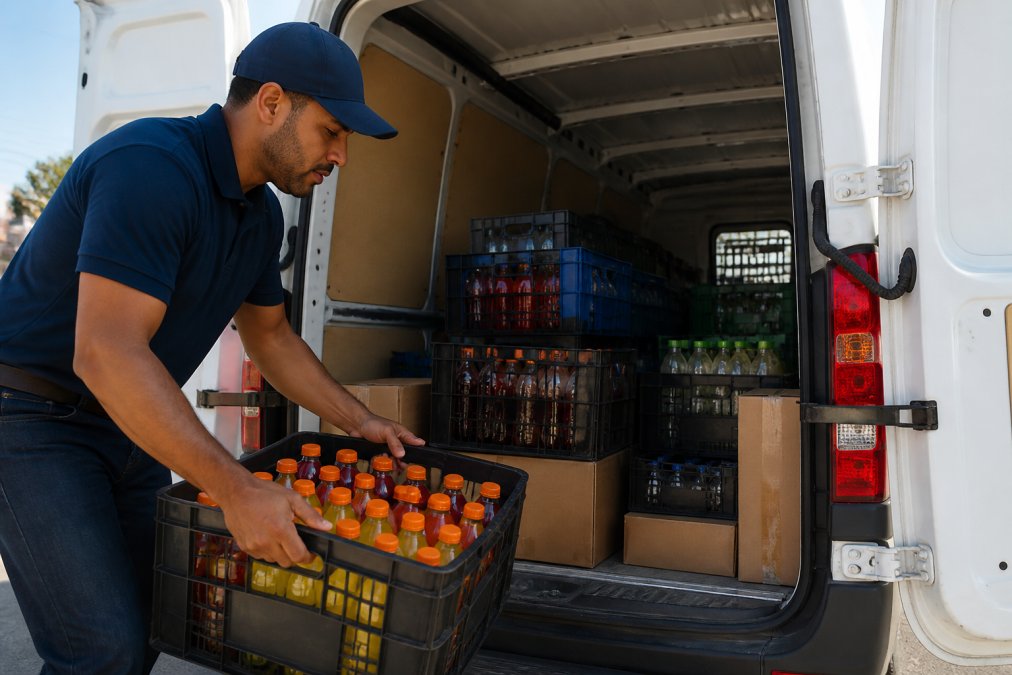
A DSD driver delivers products directly from a distribution center to individual retail stores, then stocks shelves and rotates inventory on site. Unlike warehouse-to-warehouse freight, DSD routes combine driving with merchandising, customer service, and inventory management. Drivers typically work for beverage, snack, bakery, or general merchandise distributors. The role suits people who want regular store relationships and predictable routes rather than long-haul schedules.
Do you need a CDL for all DSD driving jobs?
No. Many DSD routes use box trucks or vans under the weight threshold that requires a commercial driver license, so a standard license and clean driving record are enough. Larger beverage and grocery distributors may require a Class B CDL for heavier vehicles. Some positions also ask for endorsements such as air brakes. Always check the job listing for license requirements before applying so you do not waste time on roles you cannot fill.
How can you tell if a DSD employer is reputable?
Look for employers with a verifiable business address, an active DOT number if they operate commercial vehicles, and a consistent presence on job boards. Check the company's registration with your state's Secretary of State office. Ask for the hiring manager's name and a direct phone number. Reputable employers provide a written compensation package, clear route expectations, and do not pressure you to pay for training or equipment upfront.
Is DSD driving better than OTR trucking?
It depends on what you want. DSD routes keep you local or regional, so you are home most nights and have a predictable schedule. OTR pays more per mile but means days or weeks away from home. DSD work also involves physical merchandising and direct customer interaction, which some drivers prefer and others do not. If work-life balance and steady routes matter more than long-haul pay, DSD is usually the better fit.
Finding a DSD route that fits your life takes more than a keyword search. It takes verified employers, transparent pay, and routes that match your schedule and physical capacity. DSD Route Sales Connections was built for exactly this: a nationwide marketplace exclusive to direct store delivery, with direct applications and no middlemen. Search jobs on DSD Route Sales Connections and connect with employers who are hiring route drivers and sales reps right now.