 listicle
Benefits of Becoming a DSD Independent Operator in 2026
Last Updated: October 22, 2026
Quick Summary
Becoming a DSD independent operator gives you control over your schedule, income, and territory, since you run the route as your own business rather than working a fixed shift. You own a route you can build and often sell, earn based on route performance, and deduct vehicle and operating costs as a self-employed operator.
- A DSD independent operator buys product from a distributor, delivers it directly to retail stores, and manages the shelf on every stop.
- Ask for the route's last twelve months of settlement statements before you commit to a purchase.
- Self-employment tax alone takes 15.3% of net self-employment income, with income tax on top.
- Confirm territory rights, route transfer terms, and termination clauses before signing any contract.
- Budget for health coverage and a disability or injury cushion before counting on the route's upside.
Table of Contents
- What a DSD Independent Operator Actually Does
- Seven Benefits of Becoming a DSD Independent Operator
- Independent Contractor Delivery Driver Pros and Cons
- Independent DSD Operator Income and Realistic Cost Breakdown
- Direct Store Delivery Driver Requirements and Startup Risk
- Finding DSD Independent Operator Jobs That Fit
- Frequently Asked Questions
What a DSD Independent Operator Actually Does
A DSD independent operator is a self-employed route owner who buys product from a distributor, delivers it directly to retail stores, and manages the shelf on every stop. This guide from DSD Route Sales Connections explains what the job entails, what it costs, and who it suits. Direct store delivery puts the operator in control of a territory rather than on an hourly schedule.
The work blends three jobs into one. You drive the route, you sell and merchandise the product, and you run the business side: ordering, invoicing, and vehicle costs.
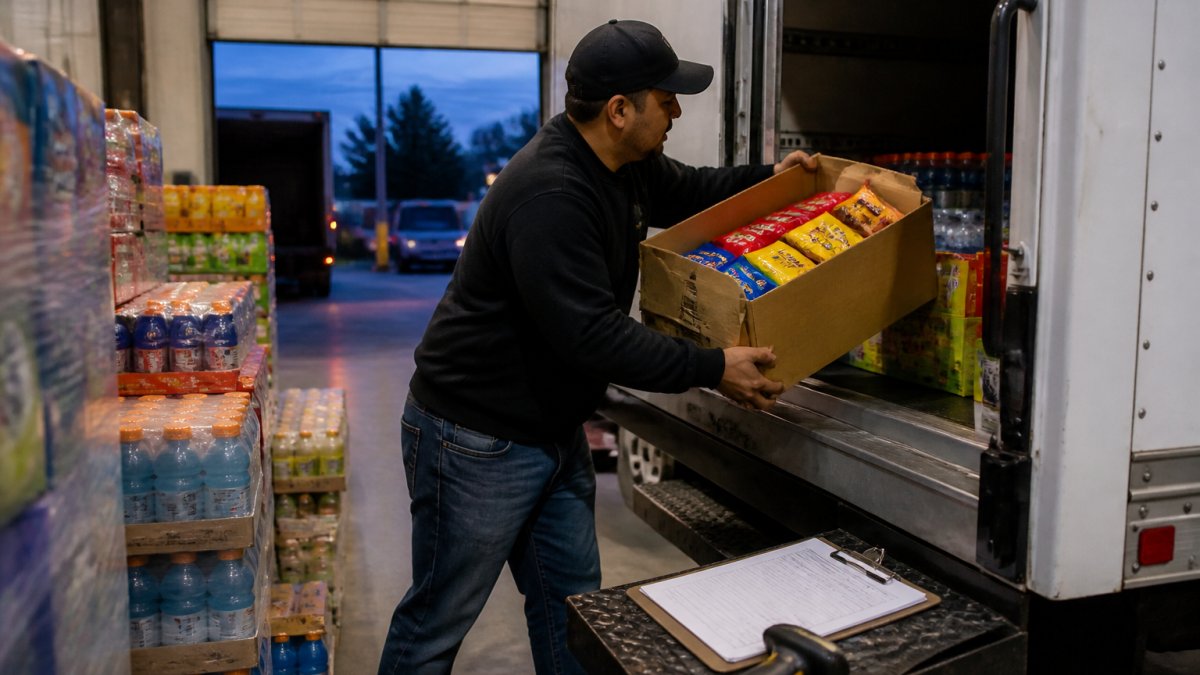
Route Sales, Merchandising, and Store Deliveries
Route sales is the revenue engine. You walk in with a handheld, scan backstock, write the order, and pull product from the truck. Merchandising is what separates a good operator from an average one: rotating stock, facing product, building displays, and removing damaged goods.
A common mistake is treating merchandising as an afterthought. Retailers judge you on how the shelf looks, not just whether the truck arrived.
Seven Benefits of Becoming a DSD Independent Operator
The benefits of becoming a DSD independent operator come down to control: over your schedule, your income, and your territory. Five of the seven below matter most to experienced drivers.
- Independence. You run the route as a business, not a shift.
- Schedule control. Most routes start early, but how you sequence stops is largely yours.
- Route ownership. A route is an asset you can build and, in many cases, sell.
- Earning potential. Income tracks route performance rather than a fixed wage.
- Customer relationships. Store managers know you by name, and that relationship pays off.
- Tax treatment. Self-employment brings deductions for vehicle and operating costs.
- No ceiling on growth. Strong operators add helpers or additional routes.
Independence, Schedule Control, and Route Ownership
Independence is the headline benefit, and it is also the one most often overstated. You still answer to the distributor and the retailer. What changes is that you decide how to hit the numbers.
Schedule control means time management becomes your problem and your advantage. Route planning done well shortens the day; done badly, it stretches past dinner. Route ownership is the real prize, because territory rights and contract terms determine what you can sell later.
Independent Contractor Delivery Driver Pros and Cons
The independent contractor delivery driver pros and cons are mostly about risk transfer. You gain freedom and tax deductions; you absorb vehicle expenses, income variability, and no employer benefits.
| Pros | Cons |
|---|---|
| Control over daily schedule | No employer health insurance or retirement match |
| Deductions for fuel, maintenance, insurance | Income varies with route performance and season |
| Route ownership can build equity | Vehicle repairs come out of your pocket |
| Direct retailer relationships | Self-employment tax obligations |
| No cap tied to an hourly wage | Startup capital and financing risk |
The honest version: independence suits people who can manage cash flow and tolerate a bad week. It punishes anyone who needs a predictable paycheck.
Independent DSD Operator Income and Realistic Cost Breakdown
Independent DSD operator income is not a salary, and anyone quoting you a fixed number is guessing. Settlement statements typically show gross revenue minus product cost and chargebacks, and what remains must cover the truck, fuel, insurance, maintenance, helpers, and taxes. The useful question is not "What does a route pay?" but "What survives after every cost is paid?"
Gross Revenue Is Not Take-Home Pay
A route's settlement statement usually starts with gross sales to the stores on the route. From that figure the distributor deducts product cost, sometimes a distribution or handling charge, and chargebacks for stale, damaged, or unsold product. What lands in the operator's account is a settlement payment, not profit. Many new operators mistake the settlement number for income and then discover the truck, fuel, and taxes were never subtracted.
A Worked Example, Not a Promise
Numbers vary by category, territory, and contract, so treat the following as an illustration of the math rather than a quote. Suppose a route's prior-year settlements show $180,000 in gross route revenue.
Run those figures and a route that looks like a $180,000 business can produce a net in the range of $20,000 to $35,000 before income tax, and a bad quarter can push it lower.
The Costs New Operators Underestimate
- Chargebacks and stale product. Spoilage and unsold returns hit margin directly. Snack and beverage routes with longer shelf life carry less risk than short-dated categories like fresh bakery or dairy.
- Vehicle downtime. A transmission repair or a failed refrigeration unit can sideline a route for days. Without a reserve, the operator misses deliveries and loses store confidence.
- Route financing. If you borrowed to buy the route, the debt service comes out of the same settlement payment every month, good or bad.
- Estimated quarterly taxes. Self-employed operators must pay quarterly estimated taxes; skipping them creates a spring surprise.
Ask for the route's last twelve months of settlement statements before you commit, and build the model above with the actual numbers. A route that looks strong in a good month can look very different across a full year of seasonal swings.
Direct Store Delivery Driver Requirements and Startup Risk
Direct store delivery driver requirements are straightforward on paper: a valid driver's license, a clean driving record, a high school diploma or equivalent, and the organizational skills to run a route. Physical demands are real, since cases get lifted all day, and most routes start before dawn. What separates a prepared operator from a casualty is understanding the startup risk and the contract terms that define the independence being sold.
The Requirements Beyond the License
Most distributors also expect a clean motor vehicle record, the ability to pass a background check, and enough comfort with handheld ordering and inventory software to run a route without hand-holding. Some categories require a DOT medical card or a commercial driver's license for larger vehicles. Confirm vehicle requirements before you buy anything: some routes supply a truck, others require you to own or finance one that meets the distributor's specifications.
Startup Capital and Where It Goes
Route purchase price, vehicle financing, and working capital are the three places new operators get hurt. A route purchase can require a substantial down payment and a financing arrangement whose terms vary widely. Working capital matters because settlements may lag deliveries, and the first months of fuel, insurance, and payroll come due before the first full settlement clears. A common pattern is to underestimate the reserve needed for the first ninety days.
Contract Terms, Route Ownership, and Territory Rights
The independence in "independent operator" is defined by the contract, not the job title. Read every clause on these points before signing:
- Territory rights. Does the agreement grant an exclusive territory, or can the distributor add another operator to your stores? Exclusivity is what makes a route sellable later.
- Route ownership and transfer. Can you sell the route, and does the distributor have a right of first refusal or an approval process? Ask what the route is worth before you buy it.
- Commissions and settlement terms. Confirm how product cost, chargebacks, and any commission or margin are calculated, and how often settlements are paid.
- Product responsibility. Who pays for stale product and returns? The answer can swing a route's profitability more than the sales volume does.
Benefits and Protections You Give Up
Independence transfers risk. As a self-employed operator you generally do not receive employer-provided health insurance, paid leave, retirement contributions, or workers' compensation coverage, and you are responsible for your own self-employment tax.
For general guidance on self-employment tax and deductible business expenses, the IRS self-employed tax center is the starting point, and the U.S. Department of Labor guidance on independent contractor status explains how worker classification works.
The best route is the one whose bad month you can survive. Check the downside before you chase the upside.
Finding DSD Independent Operator Jobs That Fit
DSD independent operator jobs are not all the same, and fit matters more than headline earnings. Match the route to your body, your schedule, and your experience before you apply.
Use this checklist:
- Confirm the start time and average day length
- Ask how many store deliveries per day and how many cases per stop
- Request settlement history for at least twelve months
- Confirm who pays for stale product and returns
- Read territory rights and termination terms in the contract
At DSD Route Sales Connections, we built a job board exclusively for direct store delivery professionals, with nationwide coverage and a direct application process that skips the middlemen. You can review federal wage and hour rules for drivers if a posting's pay structure looks unclear.
The best route is the one whose bad month you can survive. Check the downside before you chase the upside.
Frequently Asked Questions
Is a DSD independent operator an employee or a contractor?
A DSD independent operator is typically a self-employed independent contractor, not an employee of the manufacturer or distributor. That distinction matters: you handle your own taxes, vehicle expenses, insurance, and maintenance, and you usually do not receive employer benefits like health coverage or paid time off. In exchange, you gain control over your schedule, staffing, and how you run the route. Before signing anything, read the contract terms carefully and confirm how the arrangement is classified, since misclassification rules carry real financial consequences.
How do independent DSD operators get paid?
Most independent DSD operators earn from the margin between what they pay for product and what retailers pay for it, plus commissions tied to sales volume and route performance. Settlement schedules vary by program, so ask how often you get paid and what deductions apply. Income moves with delivery volume, product mix, and how well you manage spoilage and stale product. Build a reserve for slow weeks and tax payments, because a strong month does not guarantee the next one.
What are the direct store delivery driver requirements?
Most programs ask for a valid driver's license, a clean driving record, and a high school diploma or equivalent. You will need reliable transportation, often a box truck or van, plus the physical stamina for loading, unloading, and repeated store deliveries. Some routes require a CDL. Background checks and drug screening are common. Beyond paperwork, employers look for organizational skills, time management, and the customer service instincts to keep retail store managers happy on every stop.
Do independent DSD operators choose their own schedules?
You set your start times and route planning approach within the limits of store delivery windows. Most retail stores need product on shelves before opening, so early mornings are standard. The flexibility comes from how you sequence stops, when you take breaks, and whether you hire helpers. You still have to hit on-time delivery expectations, and missing windows hurts customer relationships. The freedom is real but it comes with accountability for results.
The benefits of becoming a DSD independent operator are real, but they reward operators who plan their finances and read their contracts closely. If you are ready to compare routes on schedule, territory, and settlement history, DSD Route Sales Connections gives you a focused marketplace built only for this industry. Search jobs, apply directly, and find DSD work that fits your life.