 ultimate-guide
DSD Driver Job Market Trends 2026: Salary and Demand
Table of Contents
- DSD Driver Job Market Trends 2026: What's Driving Demand
- DSD Driver Salary Trends 2026: Pay Growth and Compensation Packages
- Driver Recruitment Challenges 2026: What Employers Face
- Best Practices for Route Sales Success in a Competitive Market
- How Automation and Technology Are Reshaping DSD Roles
- Career Path and Professional Growth for DSD Drivers
- Frequently Asked Questions
Last Updated: September 16, 2026
DSD Driver Job Market Trends 2026: What's Driving Demand
The DSD driver job market in 2026 is defined by steady demand and a shrinking pool of qualified candidates. Direct store delivery drivers move products from distribution centers straight to store shelves, bypassing warehouses entirely. This hands-on role keeps retail supply chains running, and employers are competing harder than ever to fill open routes.
At DSD Route Sales Connections, we connect experienced route drivers and sales representatives with top employers across beverage, snack, bakery, and general merchandise routes nationwide. Below, we break down the salary shifts, recruitment pressures, and career opportunities shaping this sector.
Freight Demand and Last-Mile Delivery Growth
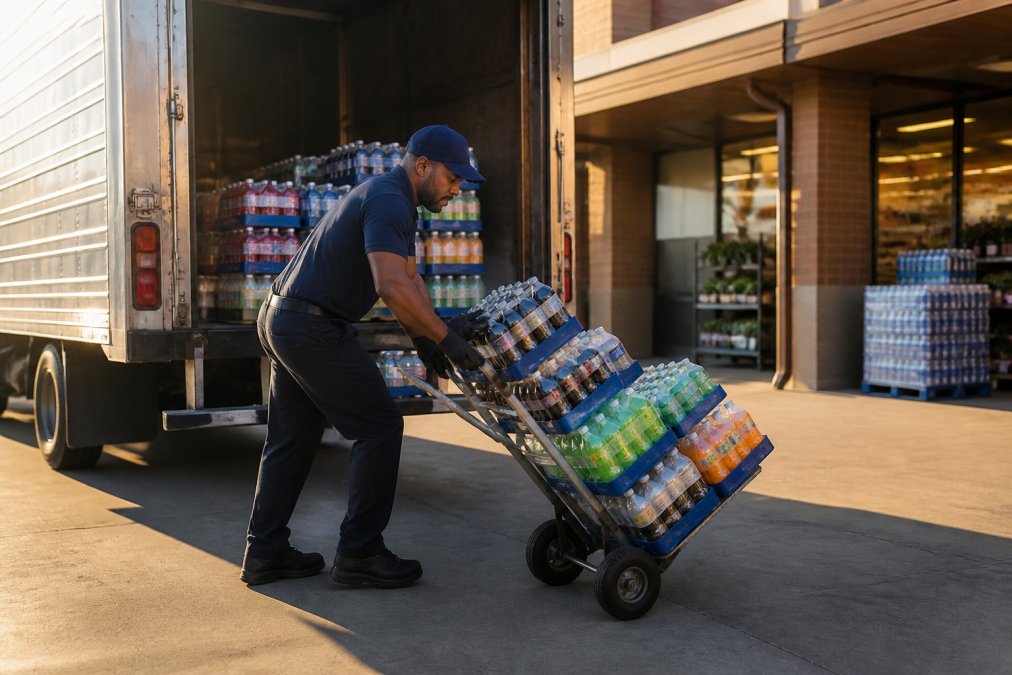
Freight demand continues to favor DSD operations because stores need frequent, smaller deliveries rather than bulk shipments. Last-mile delivery growth has pushed distributors to add routes, especially in densely populated regions where shelf restocking happens daily.
Many distributors report that route volume has increased even as overall freight patterns shift. The Bureau of Labor Statistics occupational outlook for delivery drivers projects steady demand for delivery-related roles over the next decade, driven largely by e-commerce and retail restocking needs.
Labor Pool Shifts and Driver Shortage Impact
The available labor pool for DSD roles has tightened. Fewer workers are entering trucking and delivery jobs, and many experienced drivers are retiring or moving to less physically demanding positions.
This shortage gives qualified DSD drivers use. Employers who once filled routes within days now report longer hiring timelines. A common mistake is assuming any CDL holder can step into a DSD role. The work requires merchandising skills, store relationship management, and early morning availability that general freight drivers may not have.
DSD Driver Salary Trends 2026: Pay Growth and Compensation Packages
DSD driver salary trends 2026 show upward pressure on wages as employers compete for a limited pool. Entry-level route drivers typically earn less than experienced route sales representatives, but the gap narrows when performance bonuses and commissions enter the picture.
Compensation packages now often include:
- Base hourly pay or salary
- Performance-based bonuses tied to sales volume
- Health insurance and retirement contributions
- Paid time off and route coverage guarantees
- Signing bonuses for experienced hires
The total pay picture matters more than the hourly rate alone. A route with strong commission potential can outperform a higher base salary with no incentives.
Entry-Level Pay vs. Experienced Route Sales Reps
New DSD drivers usually start on simpler routes with established accounts. Pay reflects that lower complexity. Experienced route sales reps who manage larger territories, handle merchandising independently, and maintain strong store relationships command significantly higher total compensation.
The real difference between entry-level and experienced pay comes down to account ownership. Reps who build relationships with store managers and grow order volume earn more because their routes generate more revenue.
Regional Variations in Wages and Hiring Activity
Hiring activity varies by region. Urban areas with dense retail networks tend to offer more routes but also face more competition for drivers. Rural distributors often struggle more to fill positions, which can push wages higher in those markets.
Many regional distributors find that offering flexible schedules or four-day work weeks helps attract candidates who would otherwise choose long-haul positions. Regional competition for drivers is real, and employers who adapt their offers win the hiring race.
| Factor | Entry-Level Driver | Experienced Route Sales Rep |
|---|---|---|
| Base pay | Lower hourly rate | Higher salary or commission base |
| Route complexity | Simple, established accounts | Large territories, high-volume stores |
| Merchandising duties | Limited | Full ownership |
| Bonus potential | Minimal | Performance-based commissions |
| Schedule flexibility | Set routes | Negotiable with tenure |
Driver Recruitment Challenges 2026: What Employers Face
Driver recruitment challenges 2026 center on three issues: an aging workforce, high turnover in early tenure, and competition from other sectors offering similar pay with less physical demand.
Recruiters who post on general job boards often get flooded with unqualified applicants. The American Trucking Associations workforce data has documented ongoing driver shortages across the transportation sector, and DSD roles feel that pressure acutely because they require both driving and sales skills.
The Aging Workforce and Turnover Rate
A significant portion of experienced DSD drivers are approaching retirement age. As they leave, institutional knowledge about specific routes and store relationships leaves with them. Turnover is highest in the first 90 days, when new hires discover the physical demands and early start times.
The thing nobody tells you about DSD turnover is that it's often a mismatch problem, not a pay problem. Drivers who understand the schedule and physical requirements upfront stay longer. That's why transparent job listings matter.
Best Practices for Route Sales Success in a Competitive Market
Route sales success in 2026 requires more than showing up on time. Drivers who treat their routes like small businesses outperform those who simply deliver product.
Best practices include:
- Build relationships with store managers and receivers
- Track which SKUs move fastest and adjust orders accordingly
- Arrive during low-traffic windows to avoid delays
- Communicate proactively about out-of-stocks or delivery issues
- Keep the truck organized so restocking is fast
These habits separate drivers who get promoted from those who plateau. Employers notice reps who grow their routes, and those reps get first pick of new territories.
How Automation and Technology Are Reshaping DSD Roles
Automation is changing DSD work, but not in the way headlines suggest. The reason is structural: DSD stops at the shelf, and the last ten feet of the job, breaking down a pallet, rotating stock, facing product, checking dates, and negotiating a display with a store manager, is the part no autonomous platform has solved. That distinction is why DSD roles carry more near-term job security than long-haul driving, where highway autonomy is the active battleground.
What has actually changed is the toolset inside the cab and on the hand truck:
- Handheld ordering and invoicing devices. Drivers build the next order on the spot, scan in deliveries, and capture signatures electronically. Paper route books have largely disappeared on beverage and snack routes.
- Route optimization and telematics. Distributors use GPS and stop-level data to re-sequence stops, flag chronic late arrivals, and rebalance routes when a store's receiving window shifts.
- Real-time inventory and DSD software. Platforms that sync store-level scan data with the distributor's warehouse let drivers see what sold before they build the next load, which reduces returns and out-of-stocks.
- Digital proof-of-delivery and photo capture. Dispute resolution that once took a phone call now takes a timestamped image of the stacked shelf.
What most guides miss is that these tools raise the skill floor rather than lower it. A driver who can read a velocity report, spot a SKU losing shelf space, and adjust the order before the store manager asks is worth more than one who only drives and drops. Employers increasingly weigh that analytical comfort when deciding who gets the higher-volume routes and who moves into territory management.
For drivers weighing a move into DSD, the practical implication is straightforward: get comfortable with the ordering platform your employer uses, learn what the data is telling you about each account, and treat the technology as a lever on your own commission rather than a threat to your role.
Career Path and Professional Growth for DSD Drivers
Career advancement in DSD follows a fairly predictable path for drivers who want it. Entry-level route drivers can move into route sales representative roles, then into territory management or supervisor positions.
The work-life balance advantage of DSD over long-haul driving is significant. DSD drivers sleep at home every night. They know their routes. They build relationships with the same store teams week after week. For drivers who want career stability without weeks on the road, DSD offers a clear alternative.
For those considering a move into DSD work or hiring for open routes, O*NET occupational data on delivery drivers provides detailed information on skill requirements and job outlook.
The DSD driver job market in 2026 rewards drivers who bring both reliability and sales instinct, and it punishes employers who treat hiring as a numbers game.
Frequently Asked Questions
What is the projected job outlook for DSD drivers in 2026?
The DSD driver job market remains stable, supported by freight demand and last-mile delivery growth. While broader transportation sector hiring has cooled from pandemic peaks, DSD roles tied to grocery, beverage, and snack distribution show consistent demand. Employment projections suggest moderate growth, with regional competition for experienced drivers keeping hiring activity steady in many metro areas.
Are DSD driver salaries expected to increase in 2026?
Wage growth for DSD drivers is expected to continue, though at a slower pace than the sharp increases seen in 2021-2022. Compensation packages increasingly include performance bonuses, benefits, and route-specific incentives. Total pay varies by region and product category, with beverage and snack routes often offering higher earning potential due to sales-based components.
Is a CDL required for most DSD driver positions in 2026?
CDL requirements depend on vehicle weight and route type. Many DSD roles for smaller trucks or vans do not require a CDL, while larger beverage and grocery distribution routes often do. Employers frequently list CDL as preferred rather than mandatory for entry-level positions, but having one expands available opportunities and can lead to higher pay.
How are automation and technology impacting DSD route sales roles?
Automation affects DSD roles gradually. Route optimization software, electronic proof of delivery, and inventory scanning tools reduce paperwork but do not replace the driver's core tasks: merchandising, customer relationships, and physical delivery. Drivers who adapt to handheld devices and digital ordering systems are better positioned for career stability as operations become more data-driven.